Dangerous Foods to Reheat: What Turns Toxic and Why
- Food Safety, Health & Wellness
- February 18, 2025
 Food Manifest
Key Update The Gujarat government has urged the Central Government to strengthen India’s food safety laws by introducing stricter penalties for food adulteration and improving enforcement measures. The proposal reflects growing concerns about unsafe food practices and aims to safeguard public health better. What’s Changing? Gujarat has recommended several key reforms, including: Imposing tougher penalties
READ MORE
Nestlé Expands Global Clean-Label Initiative Nestlé has announced that it will remove artificial food colours from its entire global product portfolio by the end of 2026, becoming one of the first major food manufacturers to make such a worldwide commitment. The initiative expands the company’s clean-label strategy beyond the United States, where it has already
READ MORE
Key Update The Hyderabad Food Administration and Safety Task Force (H-FAST) has taken action against multiple food businesses after uncovering serious food safety and hygiene violations during inspections conducted on June 29 and 30. The enforcement drive targeted a Zepto dark store in Mallepally, a paratha manufacturing unit in Tadban, and a chicken outlet in
READ MORE
New Standard Sets Safety Requirements for Tea Bags The Bureau of Indian Standards (BIS) has introduced India’s first dedicated safety standard for tea bags, establishing requirements for tea bag materials, packaging, labelling, and manufacturing practices. The new standard, IS 19787:2026, aims to improve consumer safety, product quality, and transparency across the tea bag industry. As
READ MORE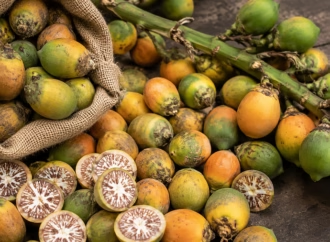
Key Update The detention of arecanut consignments from Karnataka by the Maharashtra Food and Drug Administration (FDA) has brought food safety practices in the arecanut supply chain into focus. Officials have reportedly stopped several lorries over concerns about alleged adulteration, excessive moisture, and regulatory compliance, raising concerns among growers, traders, and cooperative societies. Food Safety
READ MORE
Key Update The Food Safety Department has stepped up inspections across Kozhikode, Kerala, under Operation Monsoon, placing mayonnaise safety and takeaway food practices under closer scrutiny. Officials have warned that mayonnaise should be consumed within two hours of preparation. Using it beyond this period is not only unsafe but may also violate food safety regulations.
READ MORE




We act as your one-stop resource on the web for all things food, food safety and hygiene, and well-being.The Food Manifest team utilises the blog platform with the goal of increasing social awareness on the important issues of food safety and health.
C/o VManifest Private Limited.
Industrial Estate
Kalamassery, Kochi
Tel : 0484 3510629
foodmanifest@gmail.com