Food Manifest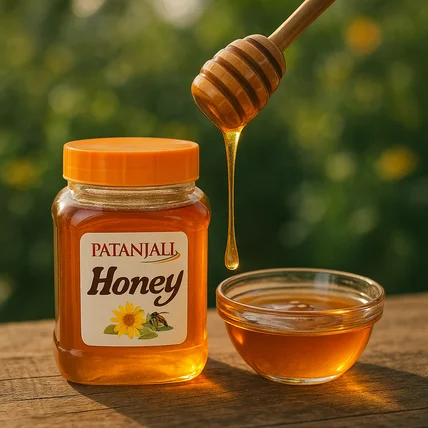
Key Development
Patanjali Ayurved has said its honey meets the highest standards of quality and purity after a peer-reviewed study was published in Applied Food Research, an international journal by Elsevier. The company stated that the research provides scientific validation of its long-standing claims on product purity and consumer safety.
Company Leadership Responds
Managing Director Acharya Balkrishna said Patanjali “practises what it preaches” and remains committed to protecting consumers from adulterated food products. He noted that Indian food products often face scepticism at global forums. Still, publication of the study in an international journal demonstrates India’s ability to achieve and sustain world-class research and quality standards. He described the findings as a matter of pride not only for Patanjali but also for the broader Indian FMCG sector.
What the Study Found
The peer-reviewed study reported that Patanjali honey contains no external sugars, synthetic syrups, or harmful chemical residues. It stated that the product complies with all regulatory requirements and operates under robust industrial-grade quality systems. Chief Scientist Anurag Varshney said researchers analysed 25 batches of honey using advanced techniques such as HPLC, HPTLC and UHPLC. He added that all batches met the food safety and quality standards prescribed by the Food Safety and Standards Authority of India (FSSAI). The findings also showed strong consistency in quality across batches.
Background: The 2020 Controversy
Patanjali honey had faced scrutiny in 2020 after a report by the Centre for Science and Environment alleged that, along with several other major brands, it failed the Nuclear Magnetic Resonance (NMR) test for sugar syrup adulteration. Patanjali rejected those allegations at the time. The latest study now positions the company’s product as compliant with national standards and aligned with international research benchmarks.
Source: The Times of India