Food Manifest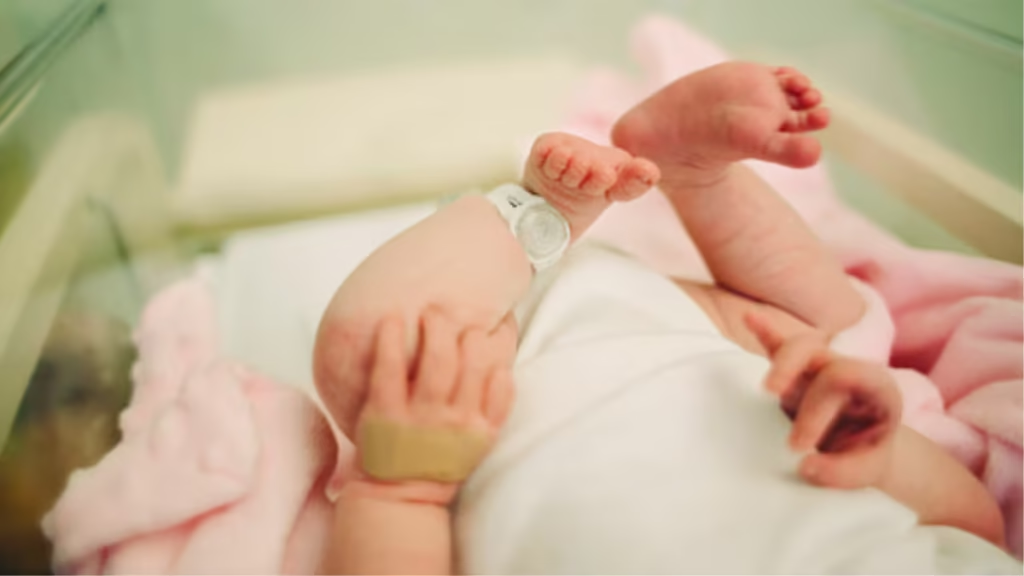
Key Update
A new study published in Scientific Reports has detected uranium in the breastmilk of lactating mothers across six districts in Bihar, raising concerns about potential health risks for infants. This is the first assessment of uranium contamination in breast milk from the Gangetic plains, a region already known for its exposure to heavy metals. Researchers analysed samples from 40 mothers aged 17–35 years from Bhojpur, Samastipur, Begusarai, Khagaria, Katihar, and Nalanda. All samples contained detectable uranium (U-238), with concentrations ranging up to 5.25 µg/L.
District Variation
- Khagaria recorded the highest average contamination (4.035 µg/L).
- Katihar showed the highest individual value (5.25 µg/L).
- Nalanda had the lowest mean.
Spatial analysis revealed that uranium was spread across all sampled districts.
Infants More Vulnerable
Using a Monte Carlo simulation of 10,000 iterations, the study found that around 70% of infants may face non-carcinogenic health risks if exposure continues. Infants are particularly vulnerable because their organs are still developing and they eliminate uranium less efficiently. No cancer risk was detected at the observed levels.
Health Concerns
While uranium’s radioactivity draws attention, its chemical toxicity poses the more immediate threat. The study notes potential impacts on:
- Kidney function
- Neurological development
- Cognitive and behavioural outcomes
Uranium can also cross the placental and blood–brain barriers, increasing the risk of developmental effects.
Groundwater Likely the Source
Earlier work by the same team found uranium contamination in Bihar’s groundwater, with some districts far exceeding the WHO’s 30 µg/L limit for drinking water. Likely contributors include geogenic sources, over-extraction of groundwater, phosphate fertilisers, and industrial waste. The breastmilk levels, however, were in the low microgram range, suggesting contamination reflects recent exposure rather than long-term accumulation.
Breastfeeding Should Continue
Despite the findings, researchers emphasise that breastfeeding remains safe and essential. The detected levels are below WHO’s drinking water limits, and most uranium absorbed by mothers is excreted through urine rather than breastmilk. Dr Ashok Sharma of AIIMS Delhi stressed that breastfeeding should only be discontinued if clinically advised.
Call for Action
The study urges:
- Statewide biomonitoring of uranium
- Regular groundwater testing
- Public guidance for pregnant and lactating women
- Improved access to safe drinking water, including RO filtration
Growing Public Health Concern
With heavy metal contamination already documented in several Bihar districts, the presence of uranium in breastmilk highlights an urgent need for environmental monitoring and safer water sources for families.
Source: India Today