Food Manifest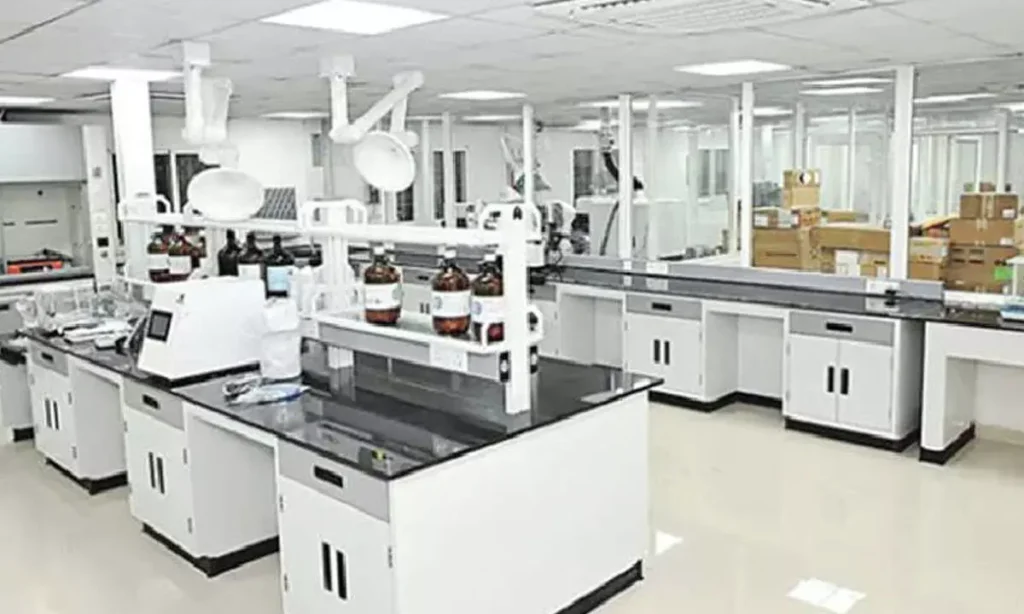
Key Update
Andhra Pradesh Chief Minister N. Chandrababu Naidu inaugurated a state-of-the-art Food Safety and Standards Authority of India (FSSAI) laboratory in Tirumala on Saturday. The facility can detect impurities at parts per trillion (PPT) levels, significantly improving food safety monitoring. The laboratory has been established with support from the central government, in coordination with Tirumala Tirupati Devasthanams (TTD) and the State Food Safety Commission. It aims to ensure that ingredients used in preparing Tirupati laddu and other prasadams meet strict safety standards.
Built to Strengthen Laddu Quality Checks
The establishment of the in-house laboratory comes after past concerns over the quality of ghee used in laddu preparation. Spread across 12,000 square feet, the facility was completed in just nine months at a cost of ₹19.15 crore. Authorities also invested an additional ₹60 lakh in generators and transformers to ensure uninterrupted operations.
Advanced Technology for Detecting Adulteration
The key feature of the laboratory is its ability to detect adulteration at PPT levels, a major improvement over earlier testing systems that operated at parts per million (PPM) levels. The lab houses chemical and microbiology divisions. On the ground floor, officials will test raw materials such as ghee, oils, and grains through physical and chemical analysis. Tests will check parameters like acidity, iodine value, infestation, and damage. Drinking water will also undergo testing for chloride, sulphate, and magnesium levels.
The facility includes advanced instruments such as Liquid Chromatography–Mass Spectrometry (LC-MS) and Inductively Coupled Plasma–Mass Spectrometry (ICP-MS), which can detect pesticides, antibiotics, aflatoxins, and preservatives in food samples. The ICP-MS system can also identify trace levels of heavy metals such as lead, arsenic, and chromium. A bomb calorimeter will measure the energy content of laddus, while a fat analyser will determine the proportion of ghee used in the preparation.
Faster Testing with In-House Facility
According to TTD Additional Executive Officer Ch. Venkaiah Chowdary, the new laboratory will eliminate the need to send samples to external facilities. This will allow faster detection of contaminants and chemical residues. He noted that the advanced facility is unique among temple institutions and is expected to set a benchmark in food safety management at major pilgrimage centres.
Microbiological Testing and Sample Preservation
The first floor of the laboratory houses microbiological testing facilities where samples will be examined for harmful bacteria such as E. coli and Salmonella. An advanced air handling unit maintains controlled temperature, pressure, and humidity to ensure sterile testing conditions. The lab also includes a deep freezer capable of reaching –40°C for sample preservation. To further strengthen the facility, authorities have sanctioned ₹3 crore for installing electronic nose (e-nose) and electronic tongue (e-tongue) systems. Expected to be operational within two months, these systems will analyse smell and taste patterns to assess the purity of ghee and other ingredients.
Source: Deccan Chronicle