Food Manifest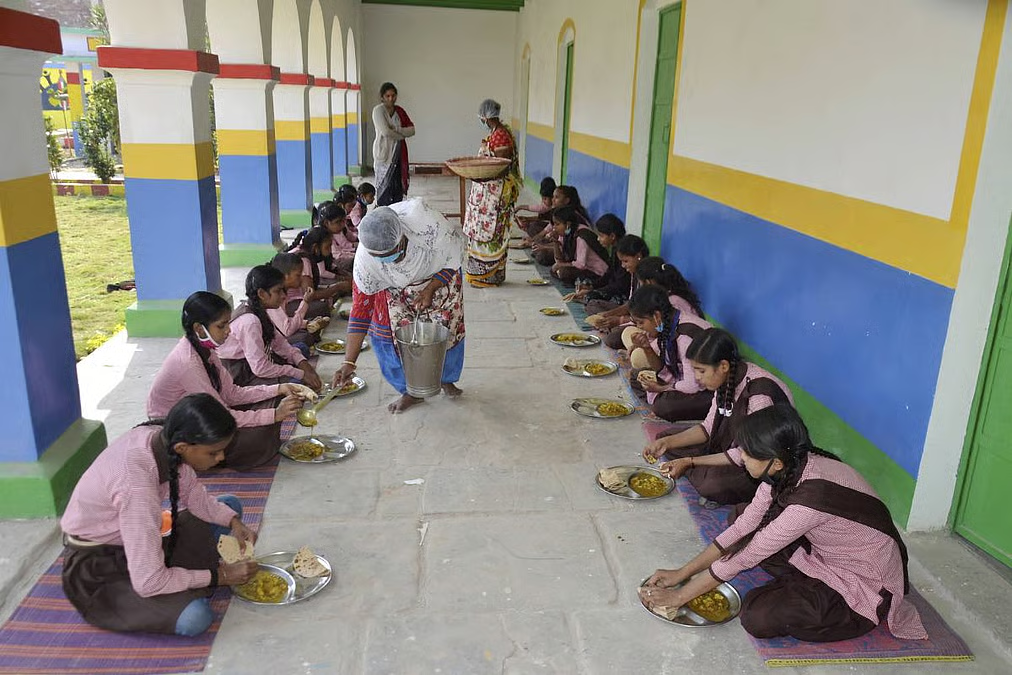
Overview
Telangana has earned national recognition for its welfare-driven education reforms, particularly its network of fully residential schools serving students from Scheduled Castes (SC), Scheduled Tribes (ST), Backwards Classes (BC), and minority communities. Run by the Telangana Social Welfare Residential Educational Institutions Society (TGSWREIS) and its affiliated welfare bodies, these schools offer free, English-medium education, aiming to transform the life chances of first-generation learners through academic excellence, leadership training, and digital skills development.
Since the state’s formation in 2014, the residential school system has expanded rapidly under the previous Bharat Rashtra Samithi (BRS) government. Guided by the vision of former IPS officer Dr R.S. Praveen Kumar, the model draws on Ambedkarite ideals of social justice and empowerment. Specialised initiatives such as the Coding Academy in Ranga Reddy district reflect this ambition, positioning Telangana as a frontrunner in combining welfare education with technology-driven learning.
Standardised Meals, Uneven Nutrition
Alongside this academic progress, however, concerns around student health and nutrition have come into sharper focus. Telangana’s welfare residential schools follow a standardised weekly food menu prescribed by the welfare societies. The menu includes four meals a day—breakfast, lunch, snacks, and supper—and features staples such as rice, sambar, curd, vegetable curries, eggs, milk, and seasonal fruits. Millet-based snacks like millet kurkure and cookies, along with occasional chicken or mutton, are also included.
On paper, the menu appears diverse and regular. Yet recurring incidents of food poisoning in government-run residential schools prompted inspections by the Telangana Education Commission (TEC), which identified problems related to food quality, water used in cooking, and overall food safety practices.
What the Study Found
A deeper concern emerged from a University of Hyderabad–Institution of Eminence (UOH–IoE) project on food and nutrition security conducted during 2024–25. The study drew on multiple datasets, including data collected by the Synergy India Foundation across residential schools in Ranga Reddy and Vikarabad districts, and a detailed nutritional assessment of students at the Coding Academy.
The assessment of 428 students aged 11–18 years at the Coding Academy revealed that nearly 80% fell below the healthy Body Mass Index (BMI) range as per World Health Organisation (WHO) standards. Undernutrition was widespread among both girls (83%) and boys (78%). Severe and moderate thinness were common, while overweight and obesity were almost absent.
Despite regular meals and a structured menu, the findings suggest that while food quantity may be sufficient, the nutritional balance is inadequate. Deficiencies in protein, iron, and essential micronutrients appear to persist, indicating gaps between menu design, actual intake, and nutritional outcomes.
Why Nutrition Must Match Educational Vision
These findings highlight a troubling paradox. Even as Telangana pioneers digital empowerment and academic innovation for marginalised students, a silent nutrition crisis threatens to undermine these gains. Undernourished children are less likely to achieve optimal physical growth, cognitive development, and academic performance.
For Telangana’s welfare school model to truly deliver on its promise of social mobility, nutrition must receive the same priority as education. Regular nutrition audits, improved meal planning, stricter food safety oversight, and ongoing health monitoring must become integral to the residential school system. Educational ambition, no matter how visionary, cannot succeed without a foundation of healthy, well-nourished students.
Source: Newsminute