Food Manifest
Key Update
Separate warning labels that highlight high levels of saturated fat, sugar, and sodium on packaged foods can significantly reduce consumers’ likelihood of choosing such products, according to a study published in The Lancet Public Health. The findings show that clear front-of-pack labels can help consumers make healthier food choices.
Multi “High-In” Labels Most Effective
The study found that the “Multi High-In labels scheme”, which uses separate warning labels for saturated fat, sugar, and sodium, performed better than other labelling formats. Because each nutrient of concern is clearly flagged, consumers can quickly identify products high in unhealthy ingredients. Researchers suggest considering this format for wider use to support healthier purchasing decisions.
Large Study Compared Labelling Formats
Researchers conducted an online randomised controlled trial in the United States involving more than 15,500 participants. The study compared several front-of-pack labelling formats.
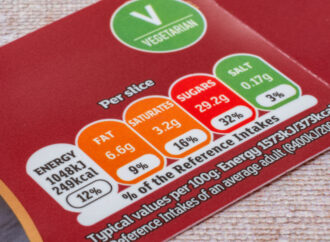
These included the Nutrition-Info-Red scheme, which uses low, medium, and high descriptors with “high” highlighted in red; a single black-and-white warning label indicating high levels of certain nutrients; the Multi High-In label scheme; and a nutrition information box format proposed in the United States that lists nutrients of concern with descriptors and percentage daily values.
Warning Labels Improve Understanding
The study found that all front-of-pack labels improved consumers’ understanding of nutrient content and reduced the selection of products high in sugar, salt, or saturated fat. However, qualitative warning labels performed better than numerical or information-based labels in influencing consumer choices. Among the formats tested, the Multi High-In label scheme performed consistently well. The presence of multiple warning labels helped consumers quickly judge the overall healthfulness of a product.
Previous research has also shown that multi-label High-In designs help consumers identify products high in sodium and saturated fat more effectively than single warning labels. The study also found that this format resulted in the highest recall of label information and the lowest likelihood of choosing products high in unhealthy nutrients. Importantly, it was also the least likely to create a misleading perception that unhealthy foods were healthier.
Debate Over Labelling in India
The findings come at a time when India is debating front-of-pack labelling for packaged foods. Food industry groups favour a star rating system, where products receive stars based on their ingredients. Consumer groups oppose this approach, arguing that giving stars to products high in sugar, salt, or fat could create a misleading “health halo” and confuse consumers.
Source: The Times of India