Food Manifest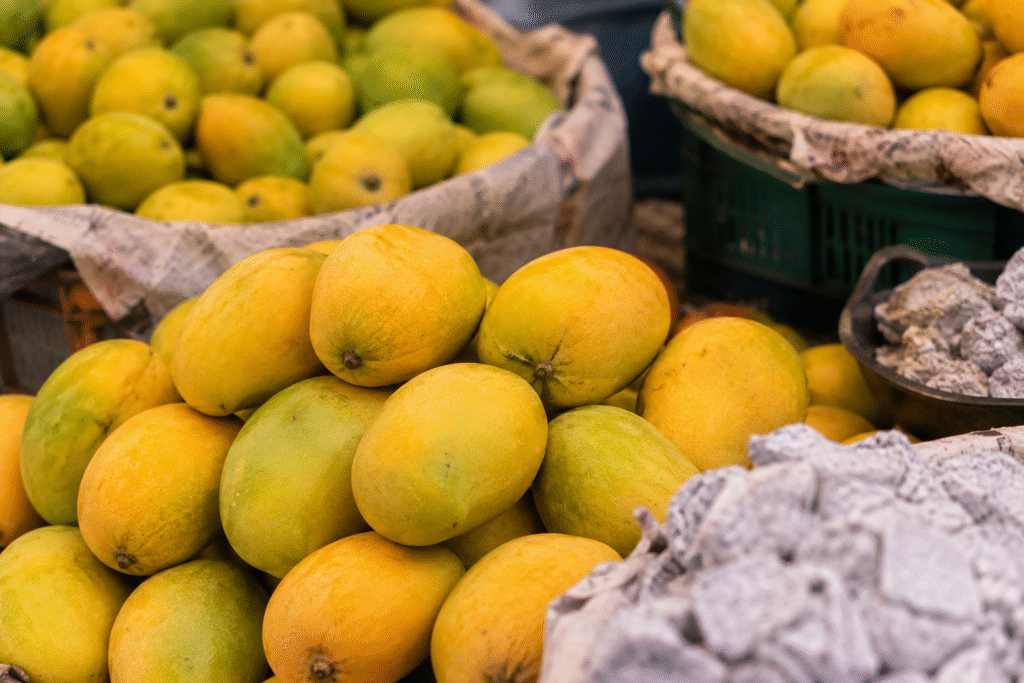
Key Update
As Kerala’s native mango season ends, mangoes from Tamil Nadu, Karnataka, and Andhra Pradesh have started dominating local markets. Consumers and traders are now raising concerns that many of these fruits are being artificially ripened using calcium carbide, a banned and hazardous chemical.
Traders reportedly place calcium carbide packets inside mango crates. The chemical reacts with moisture in the air and the fruit, releasing acetylene gas, which speeds up ripening. This reaction also leaves behind calcium hydroxide, often visible as a white chalk-like powder on the fruit or packaging.
Food safety experts advise consumers to soak mangoes in clean water for at least one hour before eating them, as this may help reduce surface chemical residues. With local mangoes and the first harvest from Muthalamada already over, markets now mainly sell varieties such as Banganapalli (Safeda), Totapuri, Sindhooram, Malgova, Neelam, and Dasheri.
Consumers Question Lack of Inspections
Consumers and retail traders say food safety officials conduct only a few inspections at the beginning of the season and rarely monitor markets continuously afterwards. They also point to a shortage of officers at border checkpoints and wholesale markets, making regular inspections difficult. Delays in laboratory test results further weaken enforcement and allow suspected carbide-ripened fruits to continue reaching consumers.
Public Concern Continues
The possible presence of calcium carbide in mangoes remains a major food safety concern in Kerala. Health experts warn that regularly consuming artificially ripened fruits may pose health risks and stress the need for stronger surveillance and enforcement.
Source: Mathrubhumi