Food Manifest
Flavour plays an important role in how we experience food. The aroma of vanilla in a dessert, the citrus note in a beverage or the familiar taste of a fruit-flavoured snack can influence what we choose to eat and how much we enjoy it. But while flavour may seem simple, different substances can create these tastes and aromas, and they can come from very different sources.
This is where food flavourings come in. Food manufacturers use flavouring agents to impart or modify the flavour or aroma of foods. They use them in a wide range of products, from beverages and confectionery to bakery products and processed foods. Under the Food Safety and Standards Authority of India (FSSAI) framework, flavouring agents fall broadly into three categories: natural flavours and natural flavouring substances, nature-identical flavouring substances, and artificial flavouring substances.
Consumers often misunderstand these terms, particularly because the word “natural” can create the impression that a flavouring is automatically healthier or safer. Understanding how these three categories differ can help put that assumption into perspective.
What Are Food Flavourings?
Food manufacturers use flavourings to give foods a particular flavour or aroma, or to modify an existing one. They can use them to create a characteristic taste, restore flavour lost during processing or maintain consistency in a food product.
However, flavourings and flavour enhancers serve different purposes. Flavourings impart or modify flavour, while flavour enhancers enhance the existing taste or flavour of a food. Understanding this distinction helps explain the different roles these substances play in food production. So, what exactly distinguishes the three types of flavourings recognised under the FSSAI framework?
Natural Flavours and Natural Flavouring Substances
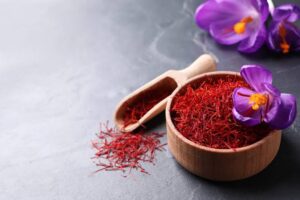
The first category includes natural flavours and natural flavouring substances. Manufacturers obtain these flavouring materials from natural sources using specified processes. However, “natural” does not mean that manufacturers simply use the original food in its raw form. They may use processes such as extraction, concentration or other physical methods to obtain the desired flavour components.
For example, manufacturers may obtain a natural orange flavour from orange peel or another natural source and then extract and concentrate the flavour components before adding them to a beverage. The flavouring remains natural even though it has undergone processing.
Nature-Identical Flavouring Substances
Nature-identical flavouring substances are flavouring compounds that manufacturers either chemically isolate from aromatic raw materials or produce synthetically. However, these substances have the same chemical identity as compounds found in natural products intended for human consumption.
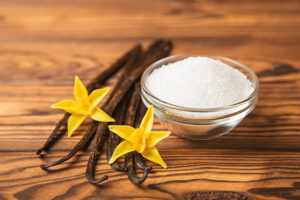
In simple terms, manufacturers can produce a flavouring substance synthetically while creating a compound that is chemically identical to one that occurs naturally. For example, vanillin, which gives vanilla much of its characteristic aroma, occurs naturally in vanilla beans but can also be produced synthetically. When the synthetically produced vanillin has the same chemical identity as the naturally occurring compound, it is considered a nature-identical flavouring substance.
This distinction is important because the source of a substance and its chemical identity are not necessarily the same thing. A synthetic production method does not automatically make a nature-identical flavouring unsafe.
Artificial Flavouring Substances
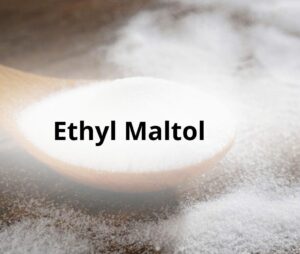
The third category includes artificial flavouring substances. FSSAI defines these as substances that manufacturers have not identified in natural products intended for human consumption, whether processed or unprocessed. Manufacturers produce these substances synthetically to provide specific flavouring properties. Examples include ethyl vanillin, ethyl maltol and methyl anthranilate.
The word “artificial” can make consumers cautious, but the term itself describes a classification rather than a safety warning. As with other flavouring substances, manufacturers must use these substances appropriately and comply with applicable food-safety requirements. Their safety depends on the specific substance, how and at what level manufacturers use it, and the resulting consumer exposure.
Does Natural Mean Safer?
The word “natural” often makes consumers assume that a flavouring is automatically safer or healthier than a nature-identical or artificial one. However, the source of a flavouring substance alone does not determine its safety.
Food manufacturers must consider the quality and safety of natural flavouring substances just as they do with other food ingredients. Safety depends on factors such as the specific substance, its source, how manufacturers obtain and process it, the amount they use in food and the level of consumer exposure. Similarly, producing a flavouring synthetically does not automatically make it unsafe.
Therefore, natural, nature-identical and artificial describe categories based primarily on the nature and source of flavouring substances, rather than ranking them from safer to less safe. Manufacturers must use permitted flavourings appropriately and comply with applicable food-safety requirements.
How Does FSSAI Regulate Flavourings?
FSSAI regulates the use of flavourings in food and sets requirements for their use. Its framework recognises natural, nature-identical and artificial flavouring substances and establishes provisions governing their use. FSSAI also prohibits or restricts certain flavouring substances, including coumarin and dihydrocoumarin, β-asarone, safrole and isosafrole, and thujone and isothujone, under the applicable provisions.
These requirements highlight an important food-safety principle: what matters is not simply whether a flavouring is natural or synthetic, but which substance manufacturers use, whether FSSAI permits its use and whether manufacturers comply with the applicable requirements.
What Should Consumers Look For?
Understanding these categories can help consumers interpret food labels more accurately. A “natural flavour” claim refers to the nature or source of the flavouring; it does not mean that the entire product is natural, healthier or minimally processed. Similarly, the presence of an artificial flavouring does not, by itself, mean that a food is unsafe or unhealthy. Consumers should consider the complete ingredient list and nutrition information, rather than judging a product based solely on the words “natural” or “artificial”.
The Bottom Line
Natural, nature-identical and artificial flavourings differ mainly in their source and how they are obtained. Natural flavourings come from natural sources; nature-identical flavourings may be produced synthetically but are chemically identical to substances found in nature; and artificial flavouring substances are not identified in natural products under the relevant definition.
Ultimately, “natural” is not a guarantee of greater safety. What matters is the specific substance, how and at what level it is used, and whether its use complies with applicable food-safety requirements.