Food Manifest
Significant Update
A tragic incident in Ahmedabad’s Chandkheda area has raised serious food safety concerns after two young sisters died and their parents were hospitalised following a meal of dosa made from store-bought batter. The family reportedly bought ready-made batter from a local dairy and prepared dosas at home. Soon after eating, family members developed severe vomiting and other symptoms and rushed to the hospital.
At first, the family suspected food poisoning from the batter. However, authorities say the exact cause is still unclear. Officials have collected food samples for forensic testing and started an investigation to determine whether contamination or another factor caused the illness.
Is Dosa Batter Usually Safe?
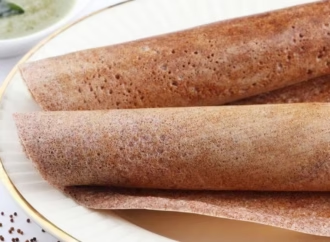
People traditionally prepare dosa batter by fermenting rice and lentils. This natural fermentation produces beneficial bacteria that improve flavour and make the food easier to digest. When handled properly, dosa batter is generally safe and can support gut health. However, ready-made batter is highly perishable. If manufacturers, retailers or consumers fail to keep it properly refrigerated, harmful bacteria can grow quickly. This contamination can lead to symptoms such as vomiting, nausea, stomach pain and diarrhoea.
What Can Go Wrong?
Food safety experts say several factors can make packaged batter unsafe.
Poor refrigeration: Manufacturers and retailers must keep fermented batter cold during storage and transport. When temperatures rise, bacteria multiply rapidly.
Cross-contamination: Unclean equipment, containers or poor handling practices can introduce harmful microbes.
Expired products: Fermentation continues over time. Using batter beyond its shelf life increases the risk of spoilage.
Improper storage at home: Consumers must refrigerate the batter. Leaving it outside the refrigerator for long periods can make it unsafe.
Why Investigators Are Still Unsure
Investigators found that several other customers reportedly bought batter from the same batch without falling ill. This observation has raised doubts about whether the batter alone caused the tragedy. The reported death of a three-month-old infant has also created further questions because infants usually do not consume solid foods. Authorities are now waiting for detailed forensic and medical reports to identify the exact cause.
Simple Food Safety Tips
Even though the investigation is still underway, the incident highlights some basic food safety practices:
- Check the manufacturing and expiry date before buying.
- Store batter in the refrigerator below 5°C.
- Avoid batter that smells unusually sour or looks discoloured.
- Use the batter soon after opening.
- Prepare fresh batter at home whenever possible.
A Reminder About Perishable Foods
Fermented foods like dosa batter can be safe and nutritious when people handle them properly. However, like any perishable food, they require proper storage and hygiene. The Ahmedabad incident reminds us that food safety depends not only on the product but also on how people store and handle it before eating.
Source: The Indian Express