Food Manifest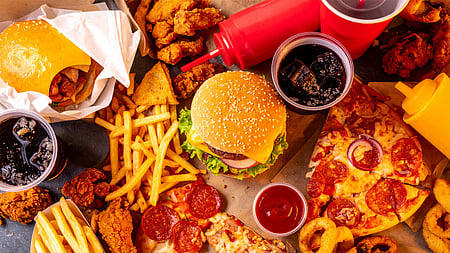
Key Development
A recent survey by LocalCircles shows that India’s Gen Z frequently orders ultra-processed foods (UPFs)—including soft drinks, juices, biscuits, cakes, ice creams, candies, chips, and noodles—through popular online apps. Alarmingly, one in two packaged food items listed on quick-commerce platforms is high in fat, sugar, and salt (HFSS).
The survey’s findings echo the Lancet series on Ultra-Processed Foods, which warned that rising UPF consumption worldwide is harming public health and driving chronic diseases such as obesity, diabetes, and cancer.
Online Food Environment: Platform-Wise Findings
The survey, based on over 24,000 responses from parents across 277 districts, found that eight major platforms have a high proportion of UPFs:
-
Blinkit: 62%
-
Zepto: 58%
-
Swiggy Instamart: 54%
-
Jiomart: 50%
-
BigBasket: 49%
-
Milkbasket: 48%
-
Amazon Fresh: 44%
-
Flipkart Minutes: 42%
Additionally, 39% of households reported that Gen Z members regularly purchase UPFs online, while nine in ten parents believe a clear red label on HFSS foods would encourage healthier choices.
Experts Advocate Front-of-Pack Labelling (FOPL)
Dr Arun Gupta, co-author of the Lancet series and Convenor of Nutrition Advocacy in Public Interest (NAPi), noted that India’s food system heavily promotes UPFs, making unhealthy options cheap, convenient, and aggressively marketed, while healthier alternatives remain limited. He emphasised that parents strongly support red FOPL labels and urged the FSSAI to implement them without delay to curb the rising obesity burden.
Consumers Demand Action
Sachin Taparia, founder of LocalCircles, highlighted that a 2023 survey had already found seven in ten Indian consumers supported red FOPL labels. Despite raising the issue with FSSAI, no concrete action has been taken. Taparia added that clear labelling and consumer awareness could drive manufacturers to create healthier alternatives, which could then be highlighted on e-commerce platforms.
UPFs Linked to Rising Health Risks
The Economic Survey 2024-25 underscored that the rapid growth of UPF consumption contributes significantly to India’s NCD burden. According to the survey, unhealthy diets account for 56.4% of the country’s total disease burden, a finding also highlighted by the Indian Council of Medical Research (ICMR).
Source: The New Indian Express