Food Manifest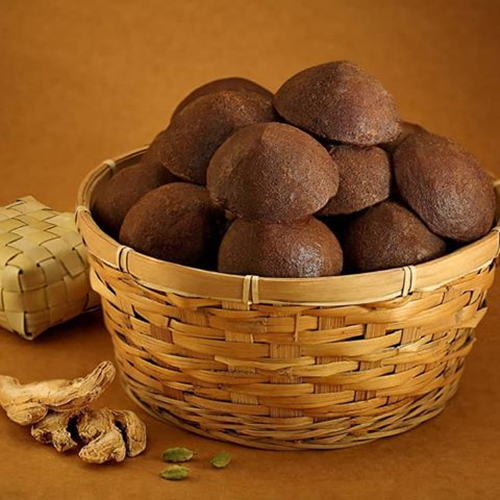
Key Update
The Tamil Nadu Food Safety and Drug Administration (FSDA) has proposed amendments to the Food Safety and Standards (FSS) Act, 2006, to curb the adulteration of traditional palm-based sweeteners such as karupatti (palm jaggery) and karkandu (palm sugar candy). The move stems from concerns that current food safety norms do not adequately distinguish genuine products from sugar-blended substitutes.
Regulatory Loopholes Under Scrutiny
Officials said existing regulations specify only minimum levels of invert sugar and sucrose for palm jaggery and karkandu, without setting any upper limits. This gap, they noted, allows sugar-blended products to comply with standards, putting traditional producers at a disadvantage and misleading consumers.
To assess the impact, the department conducted an experimental study comparing the sugar profiles of traditional and sugar-blended products. The analysis showed that the absence of upper limits disproportionately benefits manufacturers using refined sugar rather than traditional methods.
Proposal Sent to Centre
The Tamil Nadu government has accepted the department’s recommendations and forwarded the proposal, along with the study report, to the Union Ministry of Health and Family Welfare for consideration.
Under the proposed amendments, the state has suggested capping “total sugar expressed as invert sugar” at 92% for palm jaggery and 90% for karkandu. It has also proposed fixing “total sugar expressed as sucrose” between 75–86% for palm jaggery and 75–88% for karkandu, while limiting extraneous matter in karkandu to a maximum of 2.5%.
Existing Norms Lack Balance
As per the Food Safety and Standards Regulations, 2011 (Food Product Standards and Food Additives – Section 2.8.4(1)), palm jaggery must contain at least 90% invert sugar and 60% sucrose. Karkandu, meanwhile, must have a minimum sucrose content of 98% by weight, with no prescribed limit for invert sugar.
Officials said these provisions allow sugar-blended products to remain within legal thresholds, enabling adulterated items to enter the market and undermining consumer confidence in traditional karupatti.
Study Reveals Clear Variations
To support the proposal, the department analysed 23 samples of traditional palm jaggery, 21 sugar-blended jaggery samples, 26 traditional karkandu samples, and 31 sugar-blended karkandu samples at four accredited laboratories.
The findings showed that traditional palm jaggery contained an average of 92.3% invert sugar and 86.1% sucrose, while sugar-blended jaggery recorded higher levels—95.8% invert sugar and 88.4% sucrose—yet still met existing norms. In karkandu, traditional samples contained 87.3% sucrose, compared to 91.3% in sugar-blended versions. However, both failed to meet the current 98% sucrose requirement.
Pathaneer Analysis Highlights Processing Changes
The study also examined pathaneer collected from across Thoothukudi district. Fresh pathaneer contained an average of 16.1% invert sugar, 15.3% sucrose, 16.6 g per 100 g of carbohydrates, and 66.3 kcal per 100 g of energy.
When boiled to make jaggery, carbohydrate levels rose sharply to 68.8 g per 100 g, while invert sugar increased to 63.07% and sucrose to 59.9%. Officials said these shifts highlight the need for standards that reflect traditional processing practices.
The department said the findings strengthen the case for revising food safety norms to prevent adulteration and protect the authenticity of Tamil Nadu’s palm-based sweeteners.
Source: The New Indian Express