Food Manifest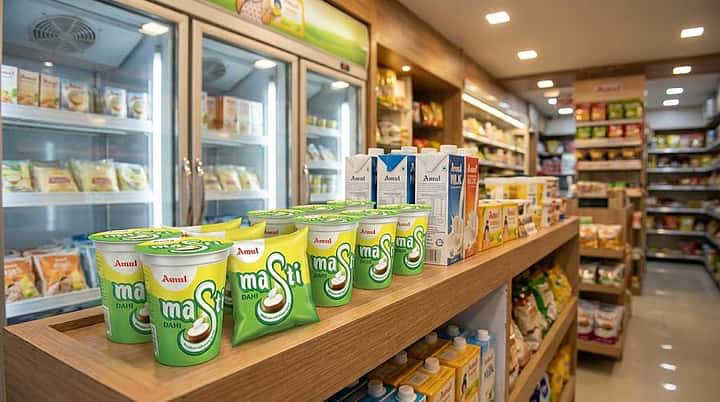
Key Update
Curd plays an essential role in Indian kitchens, offering probiotics, protein, and calcium while adding a refreshing tang to everyday meals. Recently, however, viral social media claims have raised concerns about the safety of packaged curd, specifically Amul Masti Dahi.
Video Compares Pouch- and Cup-Packaged Curd
An Instagram video shared by the handle Trustified claimed that samples of Amul Masti Dahi failed to meet food safety standards. The video compared curd sold in pouches with curd sold in cups. According to the video, the SNF (Solids Not Fat) content in the pouch sample measured 11.29, which exceeds the minimum requirement of 8.5 set by the Food Safety and Standards Authority of India (FSSAI).
The video focused on microbiological findings and claimed that coliforms, yeast, and mould exceeded FSSAI limits in the pouch-packaged curd. In contrast, the cup-packaged variant reportedly showed no concerning microbial presence. Based on these findings, the video concluded that pouch-packaged curd follows lower hygiene standards.
Amul Responds and Raises Concerns Over Testing
Amul responded to the allegations on January 5 through a post on X. The company warned that the circulating video could mislead consumers. Amul emphasised that curd is a live product containing beneficial bacteria and requires proper handling and storage according to the instructions on the pack. Amul also questioned the testing process, stating that the video failed to explain how the samples were collected, stored, or transported before testing. The company noted that improper handling can significantly affect microbiological test results.
Company Confirms Compliance With FSSAI Norms
Amul stated that it reviewed the manufacturing process and quality clearance reports for batch number SR04CM with a use-by date of December 7, 2025. The company confirmed that the batch meets all quality requirements prescribed by FSSAI, along with Amul’s internal quality standards.
Source: The Times of India