Food Manifest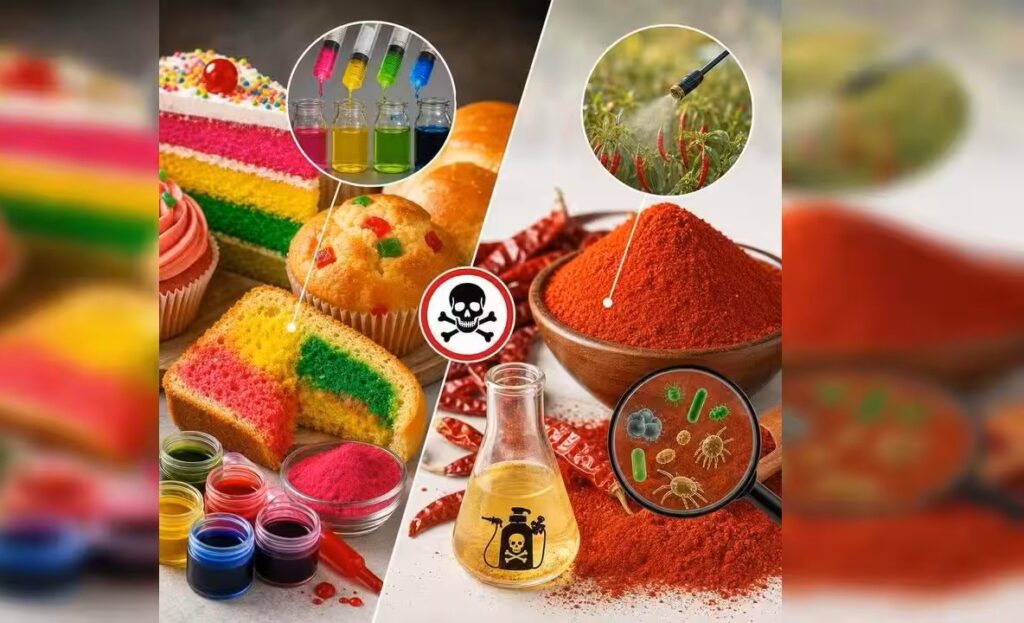
Overview
Food safety officials in Ernakulam district have flagged adulteration in bakery products and spices, with several samples found to contain preservatives, synthetic colours or pesticide residues above permissible limits.
57 Bakery, 34 Spice Samples Found Unsafe
Food safety department data shows the extent of the problem in Ernakulam district. During the 2025–26 financial year, officials found 57 bakery samples and 34 spice samples unsafe for consumption. The issue has continued into the current financial year. From April 2026 to date, officials have detected 27 bakery samples and six spice samples containing preservatives, synthetic colours or pesticide residues above the limits set by the Food Safety and Standards Authority of India (FSSAI). Authorities have registered cases against those responsible and initiated prosecution proceedings.
Synthetic Colours Raise Bakery Concerns
Bakery products have recorded several instances of adulteration, particularly in mixtures and cakes. Food safety officials in Ernakulam have also found yellow synthetic colour in banana fritters, while cases of adulterated cakes tend to increase during the Christmas and New Year season. Spices have raised another concern, particularly chilli powder brought in from other states. Officials have detected pesticide residues above permissible limits in chilli powder, including tebuconazole, chlorpyrifos, ethion, fipronil and difenoconazole.
Unorganised Sector Faces Greater Challenges
These findings also highlight the challenges faced by smaller and less-organised food businesses. Tom Thomas, vice-president of the All-India Food Processors Association and former president of the Kerala Small-Scale Industrial Association, said adulteration occurs more frequently in the unorganised sector.
According to Thomas, pesticide residues in food generally result from excessive pesticide use on crops rather than processors deliberately adding pesticides. He also noted that some farmers use synthetic red colour on dry chillies that does not disappear even after washing.
He said established bakery brands typically have laboratories to ensure that preservatives and synthetic colours remain within permissible limits. Smaller businesses may not have access to similar facilities, and workers may rely on instructions or training when using preservatives and synthetic colours. These challenges make proper handling, ingredient control and testing important across the food supply chain. For consumers, checking product labels and other required details can provide useful information when choosing packaged foods.
Consumers Need to Read Beyond Expiry Dates
Health experts say consumers can take a few simple steps to make safer and more informed food choices. Rajeev Jayadevan, convener of the IMA Research Cell, Kerala, advises consumers to check packaged foods for the required FSSAI details and read nutritional labels, especially if they have conditions such as hypertension or diabetes. Products with high sodium content, for instance, may be avoided based on individual dietary needs.
Jayadevan also points out that food safety does not depend on the expiry date alone. Consumers should check how products are stored, as perishable foods kept at temperatures higher than recommended may spoil due to bacterial growth even before the printed expiry date. AI tools can also help consumers understand nutritional information on food labels.
Source: The Times of India