Food Manifest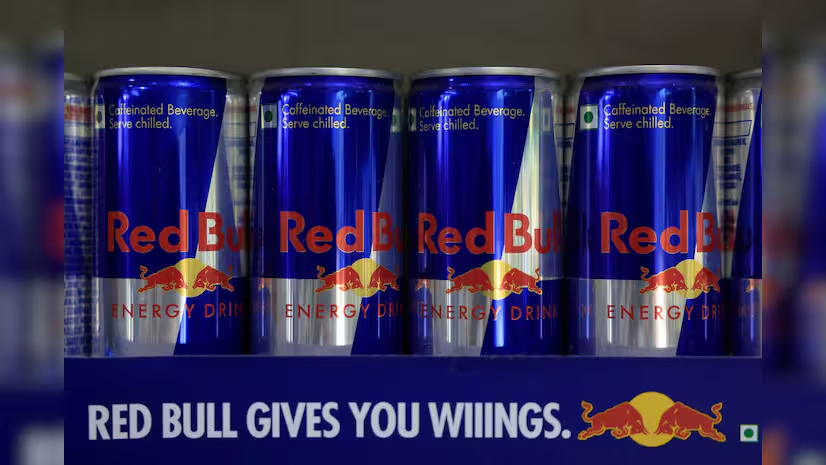
Key Update
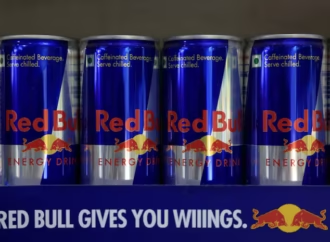
The Austrian beverage company Red Bull has approached the Delhi High Court, arguing that FSSAI restricted it without giving manufacturers prior notice. It has also warned that the move creates regulatory uncertainty for its existing and planned investments in India.
First Legal Challenge to FSSAI Move
Red Bull filed its petition on September 25, marking the first legal challenge to the regulator’s decision. In June, FSSAI directed manufacturers of high-caffeine beverages marketed as “energy drinks” to stop using the term. The move forms part of a wider food-safety enforcement drive that has included surprise inspections and closer scrutiny of major food and beverage companies.
Red Bull argues that the restriction amounts to an abrupt change even though the underlying product standard has not changed. The company has said the decision could significantly disrupt its business and affect investment plans. However, a government source told Reuters that FSSAI will defend the decision in court, maintaining that the regulator has historically not permitted the use of “energy drinks” on product labels.
India’s Energy Drinks Market Expands
The dispute comes as India’s energy drinks market continues to grow rapidly. Euromonitor estimates that retail sales are increasing by 12.6% annually, faster than in the United States and China. The market received a major boost after Pepsi launched Sting in India in 2017. Its ₹20 bottles have become particularly popular among consumers aged 15–19, according to Euromonitor. Red Bull’s revenue in India reached $130 million in 2024, more than double its revenue four years earlier. The wider energy drinks market is projected to reach $1.6 billion in retail sales by 2028.
Health Concerns Add to Regulatory Scrutiny
Regulators in several countries have tightened scrutiny of energy drinks over concerns surrounding high caffeine and sugar levels, as well as ingredients such as taurine. The UK, for instance, is set to prohibit the sale of energy drinks to children under 16 from April next year. Against this backdrop, India’s decision to restrict the “energy drink” descriptor adds another layer of regulatory pressure on a rapidly expanding market—and the Delhi High Court will now consider Red Bull’s challenge.
Source: The Indian Express