Food Manifest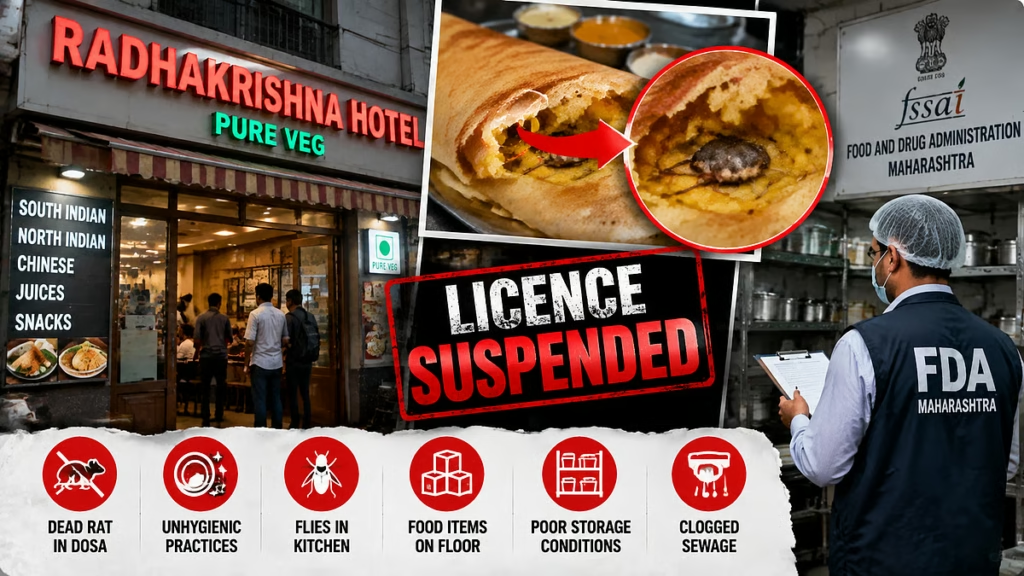
Key Update
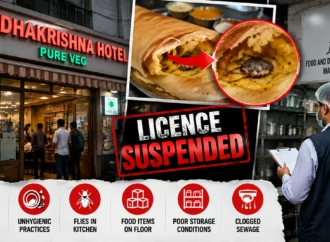
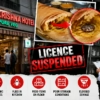
The Maharashtra Food and Drug Administration (FDA) has suspended the licence of Radhakrishna Hotel near Borivali West railway station, Mumbai, after an inspection found multiple food hygiene and sanitation violations. The action followed a complaint alleging that a customer found a dead rat inside a Mysore masala dosa served at the eatery.
Complaint Triggers Food Safety Inspection
The incident came to light after a customer visited the hotel with his family and ordered a Mysore masala dosa. According to the complaint, his brother had eaten several bites before noticing what appeared to be a small dead rat inside the dosa. He reportedly vomited after seeing it. The complainant then approached Borivali Police Station. Police forwarded the complaint to the FDA for further action. The hotel, located opposite Goyal Shopping Center on L.T. Road, near Borivali West railway station, subsequently faced a food safety inspection.
FDA Finds Hygiene And Sanitation Lapses
During the inspection, FDA officials identified several violations under Schedule 4 of the food safety regulations. These included unhygienic practices, flies on the premises, food items kept directly on the floor, poor storage conditions, and clogged sewage systems. The findings raised concerns about the establishment’s overall hygiene, sanitation and food-handling practices. A senior FDA official confirmed that the department suspended the hotel’s licence following the inspection. Maharashtra FDA Commissioner Tukaram Mundhe had earlier said that the department would take action against the restaurant after receiving the complaint and asked the complainant to approach the FDA.
Part Of Wider Food Safety Enforcement
The action against Radhakrishna Hotel comes as Maharashtra intensifies inspections of eateries and other food establishments, with authorities focusing on hygiene, sanitation and pest-control violations.
The case highlights how poor premises hygiene and inadequate sanitation can create conditions that increase the risk of food contamination. Regular cleaning, proper waste and sewage management, pest control, safe food storage, and hygienic handling remain essential to protect consumers.
Source: Fress Press Journal