Food Manifest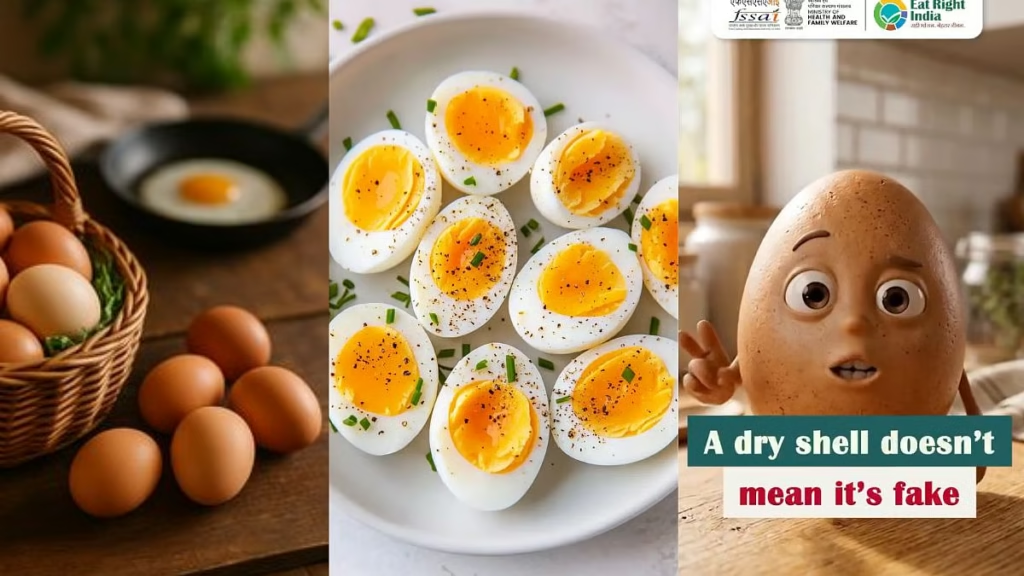
Key Update
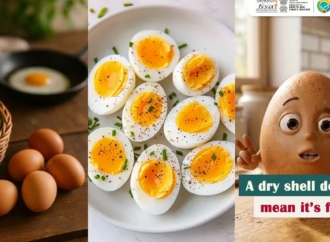
Claims about “plastic eggs” have resurfaced on social media, with viral posts suggesting that some eggs sold in the market are artificially made from plastic-like materials. The Food Safety and Standards Authority of India (FSSAI), however, has addressed the confusion and explained that changes in an egg’s appearance or texture do not necessarily indicate that it is made from plastic.
To help consumers assess egg freshness, FSSAI shared a video on X demonstrating a simple water test. The regulator also urged consumers not to let food-related rumours influence their food choices.
Why Do Eggs Change As They Age?
According to FSSAI, an egg’s texture, smell, and appearance can change as it ages or when storage conditions are unsuitable. As an egg loses freshness, the egg white can become thinner, and the yolk may become less firm. These natural changes can sometimes make an older egg look or feel unusual. However, such changes do not, by themselves, indicate that the egg is artificial or made from plastic. FSSAI also explained that the yolk and egg white can become less distinct as an egg ages. The two may even appear to mix, but this alone does not prove that the egg is fake.
How Can You Check Egg Freshness?
FSSAI has highlighted the water test as a simple way to get an indication of an egg’s freshness. Place the egg gently in a bowl or glass filled with water.
- Fresh egg: It generally sinks and lies flat at the bottom.
- Older egg: It may stand upright at the bottom as the air pocket inside becomes larger.
- Very old egg: It may float to the surface.
However, the water test only provides an indication of freshness and should not be treated as a definitive food-safety test.
Don’t Mistake Age-Related Changes For “Plastic”
As eggs age, changes in their internal structure can affect their appearance and texture. These changes can sometimes fuel misleading claims about “plastic eggs”. Instead of relying on viral videos or unverified social media posts, consumers should consider the egg’s freshness, storage conditions, and overall quality. Proper storage and thorough cooking also remain important when handling eggs.
An egg that looks different or has a firmer or thinner texture does not automatically mean it is “plastic”. Understanding how eggs change with age can help consumers separate normal quality changes from misleading food-safety claims.
Source: Free Press Journal