Food Manifest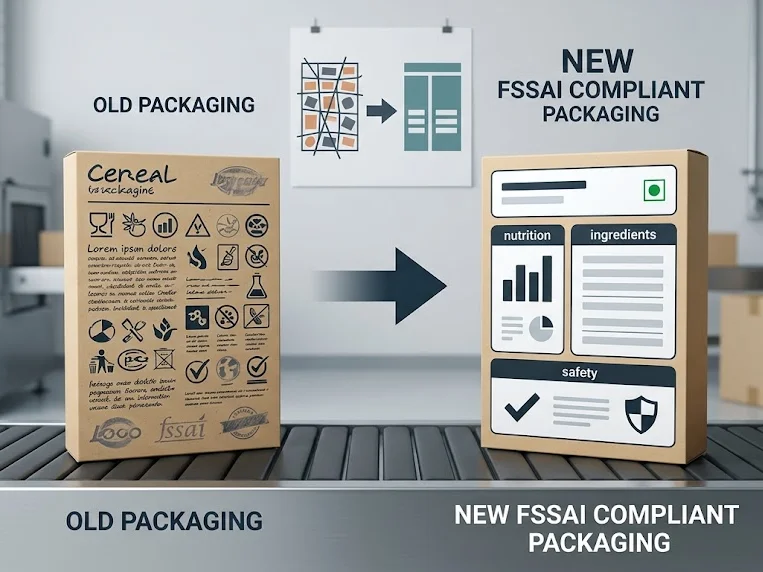
Key Update
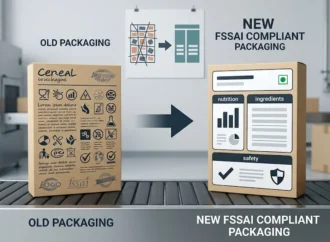
The national food regulator, the Food Safety and Standards Authority of India (FSSAI), has revised its packaging and labelling guidelines for food manufacturers. The updated rules will come into effect on July 1, 2027. The revisions aim to improve the clarity of information provided to consumers while also simplifying compliance for food businesses. At the same time, the regulator seeks to strengthen traceability across the food supply chain, particularly in the case of bulk food containers used in manufacturing, storage and distribution.
Changes in Nutritional Information
One of the key revisions concerns how nutritional information appears on certain food products. Under the updated rules, manufacturers will no longer need to provide complete nutritional details, such as Recommended Dietary Allowance percentages or the number of servings per pack on labels of infant milk and children’s food products. The regulator has also introduced a new definition for minimally processed foods, covering items such as wheat, rice, pulses, fruits and vegetables that undergo limited processing before reaching consumers.
The new guidelines also modify labelling requirements for health supplements. For supplements sold in tablet or capsule form, manufacturers will only need to declare vitamins and minerals when the product has a low-calorie contribution, reducing the amount of information required on such labels.
Labelling for Small and Bulk Packages
The revised rules also address packaging of different sizes. Food packages measuring less than 100 square centimetres will no longer need to display the regulator’s logo.
At the same time, the regulator has introduced stricter rules for bulk or non-retail containers used by manufacturers, distributors and food service businesses. These large factory containers must clearly indicate that they are not intended for direct retail sale, ensuring that bulk packs do not enter the consumer market. Even though these containers are not meant for retail, they must still carry key details such as the product name, manufacturer’s name and address, licence number, batch or lot number and storage instructions where required.
Traceability and Consumer Information
The revised guidelines also strengthen traceability requirements. If certain details cannot appear directly on the label, manufacturers must provide information such as ingredients, vegetarian or non-vegetarian status and net quantity through accompanying documents.
The regulator requires that such information remain traceable and accessible throughout the supply chain, including through digital systems where necessary. These measures aim to ensure that bulk food packs moving between factories, distributors and food businesses remain identifiable at every stage. In addition, the guidelines emphasise that all food labels must remain clear, prominent and tamper-evident, helping consumers identify properly packaged products.
Fortification and Warning Labels
Manufacturers of fortified foods must identify the added nutrients and display the appropriate fortification logo. Products may also carry the national fortification tagline promoting complete nutrition. The revised rules also strengthen warning label requirements. Products such as pan masala and sweeteners must display warnings more prominently with larger font sizes. Foods containing sweeteners such as aspartame blends must also carry warnings for children, pregnant or lactating women and individuals with phenylketonuria.
Objective of the Guidelines
Through these revisions, FSSAI aims to improve transparency in food labelling, strengthen traceability in the supply chain and make compliance easier for food businesses, while ensuring that consumers receive clearer and more reliable information about the food they purchase.
Source: The Times of India