Food Manifest
Gloves have become a familiar sight in restaurants, bakeries, catering units and food-processing facilities. Food handlers use them while preparing, serving or packing food, particularly when they want to avoid direct hand contact. However, gloves provide only an additional barrier. They do not replace one of the most basic food-safety practices: handwashing.
The principle is simple: putting on gloves does not make dirty hands clean, and wearing gloves does not prevent contamination when they are used incorrectly. FSSAI guidance emphasises proper hand hygiene and appropriate glove use to help prevent food contamination.
A Glove Is a Barrier, Not a Cleaning Method
A fresh pair of gloves may look clean when a food handler puts them on. But gloves can quickly pick up contaminants during routine activities. A worker may put on gloves, then open a refrigerator, adjust an apron, handle equipment, use a mobile phone or empty a waste bin. If the worker returns to food preparation without changing the gloves, those contaminants can reach the food. In other words, the glove can become a vehicle for carrying contamination from one surface to another. That is why proper glove use must begin with clean hands. Gloves can support good hygiene, but they cannot replace it.
Clean Hands Come Before Gloves
Food handlers should wash and dry their hands properly before putting on gloves. They should then wear a clean pair when the task requires it. This becomes particularly important when handling ready-to-eat foods such as sandwiches, salads, bakery products and cut fruits. Gloves can help prevent direct hand contact, but handlers must still use them correctly.
If a food handler touches a phone, door or other potentially contaminated surface, they should change the gloves before returning to food preparation. After removing gloves, they should wash their hands again. A simple sequence helps:
Wash hands → put on clean gloves when required → handle food safely → change gloves when necessary → wash hands again. Gloves add protection; clean hands provide the foundation.
Ready-to-Eat Foods Need Extra Care
Ready-to-eat foods require particular attention because consumers may eat them without another cooking step. If harmful microorganisms reach these foods during preparation, no later heat treatment may eliminate them. For example, a worker assembling sandwiches may answer a phone while wearing gloves and then immediately continue preparing food. The gloves may look clean, but they can carry contaminants from the phone onto the sandwiches.
Clean-looking gloves do not necessarily mean contamination-free gloves. Food handlers therefore need to consider what their gloves touch throughout the food-preparation process.
Change Gloves When Necessary
Food handlers often move between different tasks during a shift. They may prepare ingredients, clean surfaces, handle equipment, serve food or deal with waste. These activities can expose their gloves to different contaminants. For instance, a worker who handles raw meat and then handles ready-to-eat food without changing gloves can transfer microorganisms to the finished product.
Workers should change gloves when they become torn, visibly soiled or contaminated. They should also change them after touching potentially contaminated surfaces or moving between tasks that create a cross-contamination risk. Changing gloves at the right time is part of food hygiene—not a waste of gloves.
Food handlers should never wash and reuse disposable gloves. Once contaminated or damaged, they should discard them and use a fresh pair when gloves are required.
Common Glove Mistakes
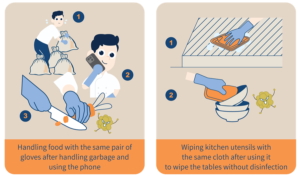
Several everyday practices can undermine the purpose of wearing gloves:
- Putting gloves on without washing hands
- Wearing the same gloves for too long
- Touching phones while wearing food-handling gloves
- Touching the face or hair and continuing food preparation
- Handling raw and ready-to-eat foods without changing gloves
- Touching bins, doors or other non-food surfaces
- Returning to food preparation with contaminated gloves
- Washing and reusing disposable gloves
- Assuming gloves are safe because they look clean
Each mistake can create an opportunity for cross-contamination.
Are Gloves Always Necessary?
Not necessarily. The need for gloves depends on the food-handling activity and the associated risks. In some situations, proper handwashing and sanitisation may provide adequate hygiene control. In others, gloves may provide an additional safeguard, particularly when handling finished or ready-to-eat foods.
Therefore, businesses should not use gloves for every task simply because they appear more hygienic. Instead, they should assess the activity, identify potential risks and apply appropriate hygiene controls.
What Food Businesses Should Focus On
Food-safety training should go beyond telling workers to “wear gloves.” Handlers need to understand when to wear gloves, how to use them correctly, when to change them and why handwashing must remain part of their routine.
Training should reinforce personal hygiene, discourage unnecessary contact with phones and other non-food surfaces, and highlight the importance of preventing cross-contamination between raw and ready-to-eat foods. Most importantly, businesses should treat gloves as one part of a broader food-safety system, not as a substitute for basic hygiene.
The Bottom Line
Gloves can help reduce contamination risks, but they cannot replace handwashing. A glove can pick up microorganisms just as a hand can. If a food handler touches a contaminated surface and then handles food, the glove can transfer those microorganisms directly to the food.
Effective food hygiene does not mean choosing between gloves and clean hands. It means using both correctly. Clean hands first. Gloves when appropriate. Change them when necessary. Because when it comes to keeping food safe, gloves provide an additional barrier – but clean hands remain the foundation.