Food Manifest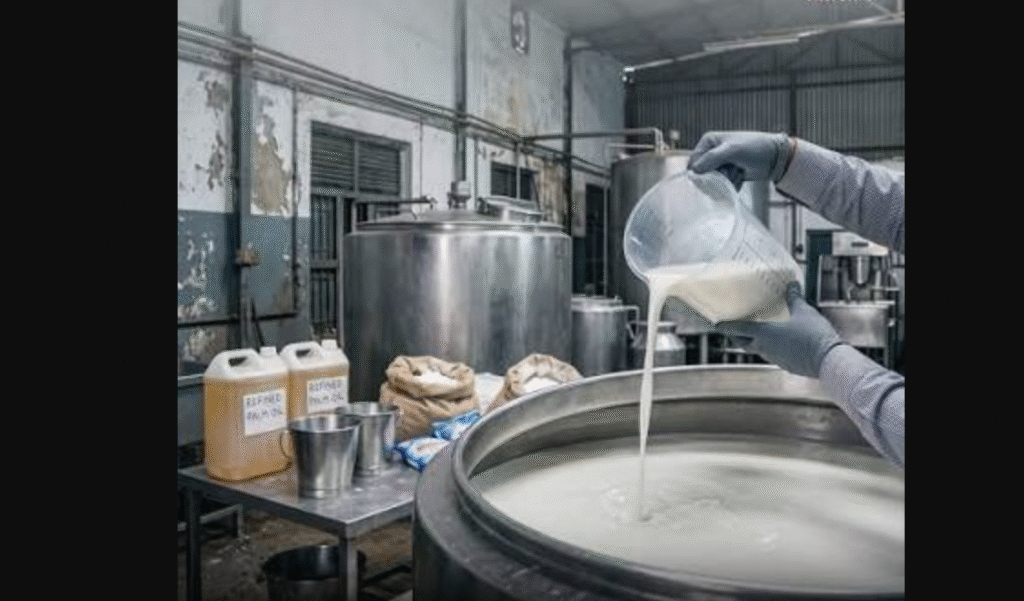
An investigation indicates that more than 2.3 crore litres of suspected adulterated milk may have entered the supply chain, as authorities intensify efforts to trace those involved.
Investigation Uncovers Large-Scale Adulteration
The Maharashtra Police and the Food and Drug Administration (FDA) have uncovered a large-scale synthetic milk adulteration racket in Bhoom taluka of Dharashiv district, raising serious food safety and public health concerns. Investigators analysed sales registers seized during the probe. They found that the accused allegedly used approximately 2,30,470 kg of low-quality milk powder over the past six months to prepare an estimated 23,04,070 litres of synthetic milk valued at around ₹9.22 crore.
Authorities Suspect Widespread Distribution
Investigators found that the accused allegedly mixed 10 litres of synthetic milk with every 100 litres of genuine milk, creating a 10% adulteration rate. Based on this ratio, authorities suspect that more than 2.3 crore litres of adulterated milk may have been distributed from milk collection centres in the Bhoom region to various parts of Maharashtra.
To mimic the appearance and fat content of natural milk, the accused allegedly added detergent powder, palm oil and low-quality chemical powders to the synthetic product.
Police Intensify Investigation
Police have registered a case against seven individuals and launched a search to locate them. They have also constituted a Special Investigation Team (SIT) to investigate the case and conduct raids at suspected hideouts. During the operation, officials seized 61 bags of suspected adulterated milk powder. Preliminary findings suggest that suppliers distributed the powder to several dairy units in the Bhoom region for the preparation of synthetic milk. Investigators are also examining the involvement of multiple milk collection centres and working to identify buyers who may have purchased the adulterated milk.
Public Health at Risk
Medical experts have warned that regular consumption of milk adulterated with detergent and other non-food chemicals may damage the liver, kidneys and digestive system. They noted that children, pregnant women and older adults face a higher risk of serious health complications.
Under the Food Safety and Standards Act, anyone found guilty of manufacturing or selling unsafe food that endangers public health may face severe penalties, including substantial fines and imprisonment, depending on the nature and severity of the offence. Authorities continue to investigate the alleged adulteration network and trace the distribution chain to determine the full extent of the case.
Source: NDTV