Food Manifest
Long before refrigerators and freezers became common household appliances, people relied on natural ingredients to preserve food. Salted fish, fruit jams, pickles and honey have been used for centuries to slow spoilage and extend shelf life. Even today, many traditional recipes and commercially prepared foods use natural preservatives to help maintain quality and freshness. But how do these everyday ingredients actually work? Do they keep food safe simply because they are natural? Understanding the science behind natural preservatives can help consumers make informed choices, appreciate traditional preservation methods and recognise that preservation works best alongside good food safety practices.
What Are Natural Preservatives?
Natural preservatives are substances derived from natural sources that help slow food spoilage by inhibiting the growth of microorganisms or delaying chemical changes such as oxidation. Common examples include salt, sugar, vinegar, honey and certain herbs and spices. Their primary role is to extend shelf life and maintain food quality. However, while they help slow spoilage, they cannot replace proper hygiene, safe storage or good food handling practices.
How Do Natural Preservatives Work?
Bacteria, yeasts, moulds and chemical reactions such as oxidation mainly cause food spoilage. Natural preservatives help reduce these risks in different ways. Some preservatives lower the acidity (pH) of food, creating an environment where many harmful microorganisms struggle to survive. Others reduce the amount of available water that microorganisms need for growth. Certain herbs and spices contain natural antimicrobial and antioxidant compounds that help slow spoilage while preserving flavour, colour and texture. Each preservative works differently depending on the food and the type of spoilage it is intended to control.
Common Natural Preservatives
Salt
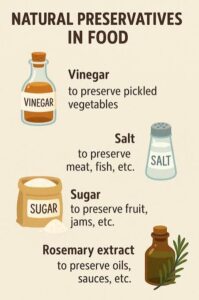
Salt is one of the oldest and most widely used natural preservatives. It works by drawing moisture out of food and microorganisms through a process called osmosis. Without sufficient available water, many bacteria cannot multiply effectively. Salt is widely used in pickles, cured meats, dried fish and fermented foods. It has been an essential part of traditional food preservation methods across many cultures and continues to play an important role in modern food processing.
Sugar
Sugar preserves food by binding water, making it unavailable for microbial growth. This is why foods with a high sugar content, such as jams, jellies and fruit preserves, can remain stable for extended periods when prepared and stored correctly. However, the preservative effect depends on the concentration of sugar. Simply adding a small amount of sugar to food does not prevent spoilage.
Vinegar
Vinegar contains acetic acid, which lowers the pH of food. Many harmful bacteria cannot grow in highly acidic environments, making vinegar an effective preservative for pickles, chutneys and sauces. The tangy flavour associated with pickled foods comes from this acidity, which also contributes to their longer shelf life.
Honey
Honey is naturally low in moisture and contains a high concentration of sugars, creating conditions that discourage the growth of most microorganisms. It also contains naturally occurring compounds that contribute to its antimicrobial properties. When stored properly in a sealed container, pure honey can remain stable for remarkably long periods without spoiling.
Herbs and Spices
Certain herbs and spices, including clove, cinnamon, turmeric, rosemary and oregano, contain natural compounds with antimicrobial or antioxidant properties. Although they are rarely used as the only method of preservation, they can help slow spoilage while enhancing flavour and aroma when combined with other preservation techniques.
Are Natural Preservatives Always Better?
The word “natural” often creates the impression that something is automatically healthier or safer. However, this is not always true. For example, salt and sugar are natural preservatives, but consuming them in excess is associated with health concerns. Likewise, natural preservatives cannot restore food that has already spoiled or make contaminated food safe to eat. Their effectiveness depends on the type of food, storage conditions and how the food is handled. While natural preservatives can slow spoilage, they cannot compensate for poor hygiene or improper storage. Consumers should therefore view them as one part of food preservation rather than a guarantee of food safety.
Natural Preservatives Still Need Good Food Safety Practices
Natural preservatives help extend shelf life, but safe food handling remains essential to keep food safe. Consumers should:
- Prepare pickles using clean utensils and store them in airtight containers.
- Use clean, dry spoons when handling jams and preserves.
- Store honey in tightly sealed containers away from moisture.
- Check preserved foods regularly for signs of spoilage such as mould, unusual odours or changes in appearance.
- Follow the storage instructions provided on packaged foods.
Combining natural preservation methods with proper hygiene and correct storage helps reduce spoilage and lowers the risk of foodborne illness.
Conclusion
Natural preservatives have been used for centuries to slow spoilage and keep food fresh for longer. Ingredients such as salt, sugar, vinegar, honey and certain herbs and spices work in different ways to inhibit microbial growth or delay chemical changes. However, they are only one part of effective food preservation. Safe food handling, proper storage and good hygiene remain essential for preventing foodborne illness. Understanding how natural preservatives work helps consumers make informed choices while recognising that no preservative can make improperly handled or spoiled food safe to eat.