Food Manifest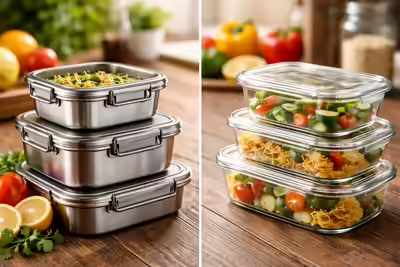
Key Update
Choosing food storage containers may seem routine, but it plays a key role in food safety, hygiene, and long-term health. In Indian kitchens, stainless steel and glass dominate as plastic use declines. Each material offers clear advantages—and some limitations—when used daily.
Stainless Steel Containers: Durable and Practical
Stainless steel has long been a staple in Indian homes. Food-grade steel remains largely non-reactive with most foods and does not leach harmful chemicals. It contains no BPA or phthalates and resists stains, odours, and bacterial buildup when cleaned properly. Steel’s biggest strength is durability. It withstands drops, crowding, and daily travel, making it ideal for lunchboxes, school tiffins, and outdoor meals. Lightweight and leak-resistant designs add to its practicality. However, steel is not microwave-safe and lacks transparency, which can make food identification inconvenient. Poor-quality steel may also react with highly acidic foods if stored for long periods.
Glass Containers: Chemically Inert and Easy to Monitor
Glass containers have gained popularity for their chemical neutrality and clear visibility. Food-grade glass does not react with acidic or spicy foods and does not retain smells or stains. This makes it especially suitable for gravies, fermented foods, and leftovers stored for several days.
Most glass containers allow direct reheating in microwaves or ovens, improving convenience and reducing dish transfers. Visibility also helps reduce forgotten food in refrigerators. Fragility remains the main drawback. Glass can crack or shatter if dropped and is heavier than steel, making it less suitable for travel. Lids, often made of plastic or silicone, may stain or hold odours over time.
Food Safety and Hygiene Comparison
From a chemical safety perspective, glass has a slight edge due to its complete inertness. Food-grade stainless steel, however, remains a safe and reliable option when used correctly. Both materials are non-porous and easy to clean, offering similar hygiene levels. In terms of physical safety, steel performs better as it does not break or create sharp fragments.
Which Should You Use?
Steel works best for packed lunches, commuting, and situations that demand durability. Glass suits home storage, meal prep, and reheating. Rather than choosing one over the other, many kitchens benefit from using both based on purpose. Ultimately, food safety depends not just on the material but on choosing food-grade containers, avoiding damage, and maintaining consistent cleaning practices.
Source: The Times of India