Food Manifest
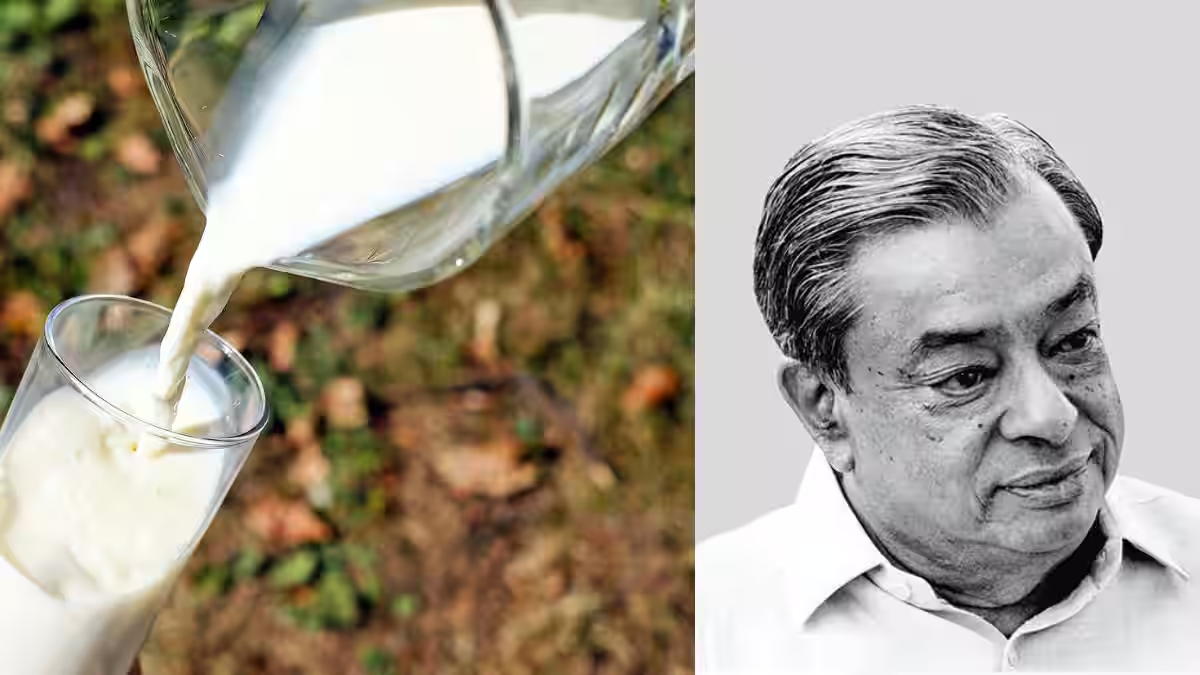
Every year on November 26, India celebrates National Milk Day, commemoratirying the birth anniversary of Dr Verghese Kurien, widely known as the Father of India’s White Revolution.
The day recognises the importance of milk and the dairy sector while honouring the vision that transformed India from a milk-deficient country into the world’s largest milk producer. At the heart of this transformation were the cooperative movement, the empowerment of dairy farmers and the leadership of Dr Kurien.
Why Is National Milk Day Celebrated in India? India celebrates
National Milk Day on November 26 to mark the birth anniversary of Dr Verghese Kurien, who was born in Kozhikode, Kerala, in 1921. The day was first celebrated in 2014, following an initiative by the Indian Dairy Association to recognise his contribution to dairy development.
The occasion also highlights the role of milk in nutrition, rural livelihoods and agricultural development. It acknowledges the efforts of dairy farmers, cooperatives, scientists and professionals who support the industry. More importantly, it offers an opportunity to reflect on the journey of India’s dairy sector and the cooperative model that helped shape it.
Dr Verghese Kurien: The Man Behind the Transformation
Dr Verghese Kurien did not initially plan a career in dairy development. After studying engineering and receiving specialised training in dairy engineering, he arrived in Anand, Gujarat, in 1949 for a government-assigned service period. His stay there changed the course of his life.
At the time, milk producers in the region struggled to market their produce and often depended on intermediaries. With limited bargaining power, they received inadequate returns for their milk. Kurien became associated with the Kaira District Cooperative Milk Producers’ Union, established under the leadership of Tribhuvandas Patel. The cooperative sought to bring farmers together, improve milk procurement and ensure fairer returns.
Drawing on his engineering expertise and management skills, Kurien helped strengthen the cooperative’s operations. The organisation eventually became the foundation of the Amul brand, which went on to symbolise India’s dairy revolution.
His work demonstrated that farmers could improve their economic security by organising themselves and managing their own production and marketing systems. The success of this approach would later inspire a much larger national initiative.
The Beginning of India’s White Revolution

Before the White Revolution, India’s dairy sector faced low productivity, fragmented production and an unreliable milk supply. The country also depended on imports to meet domestic demand.
The success of the Anand cooperative model showed that organised dairy development could offer a sustainable solution. Building on this experience, the National Dairy Development Board (NDDB) was established in 1965 to promote dairy development and strengthen producer-owned cooperatives. Dr Kurien became its first chairman. The NDDB helped extend the cooperative model beyond Gujarat, laying the foundation for a nationwide dairy development programme.
Operation Flood: The Programme That Changed Indian Dairying
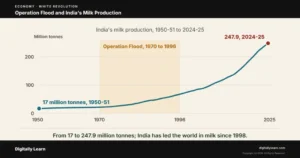
Launched in 1970, Operation Flood became the driving force behind India’s White Revolution. The programme aimed to increase milk production, improve farmers’ incomes and establish a reliable supply system connecting rural producers with urban consumers. It was built around the Anand Pattern of dairy cooperatives. Under this model, village-level societies collected milk from farmers, district unions handled processing and marketing, and state federations coordinated distribution.
Operation Flood also helped establish the National Milk Grid, linking milk-producing regions with major consumption centres. This improved the movement of milk across the country and helped address seasonal and regional shortages. Implemented in three phases between 1970 and 1996, the programme strengthened milk procurement, processing, transportation, veterinary services and dairy infrastructure.
India’s milk production increased from approximately 21 million tonnes in 1968–69 to more than 55 million tonnes in 1991–92. This growth continued in subsequent decades, helping India emerge as the world’s largest milk producer.
How the White Revolution Empowered Farmers
The White Revolution was about more than increasing milk production. It made dairy farming a more dependable source of income for millions of rural households. Through cooperatives, farmers gained access to organised markets, regular milk collection and more transparent payment systems. They became less dependent on intermediaries and gained greater control over their economic interests.
The cooperative model also created opportunities for small and marginal farmers, allowing dairy farming to complement their agricultural activities. Women played an important role in this transformation. Their involvement in animal care, milking and other dairy-related activities contributed significantly to rural milk production, while cooperative participation opened up opportunities for greater economic involvement. Alongside these changes, the development of chilling centres, processing plants, transport networks and veterinary services helped strengthen the dairy sector.
India’s Dairy Sector Today
The impact of the White Revolution continues to be visible in India’s dairy industry. According to the Department of Animal Husbandry and Dairying, India produced 247.87 million tonnes of milk in 2024–25, continuing its position as the world’s largest milk producer. Today, the dairy sector continues to support rural employment, household incomes and food availability. Its growth reflects the collective contribution of millions of farmers, cooperative institutions and dairy enterprises across the country.
A Revolution That Continues to Nourish a Nation
Dr Verghese Kurien’s legacy extends beyond milk production. He helped build institutions that placed farmers at the centre of development and demonstrated how cooperation, technology and professional management could transform rural livelihoods. National Milk Day is an opportunity to remember his vision and recognise the farmers whose daily efforts sustain the dairy industry. India’s White Revolution remains a remarkable example of collective progress. It reshaped the country’s dairy system and created a lasting foundation for farmer-led development.