Food Manifest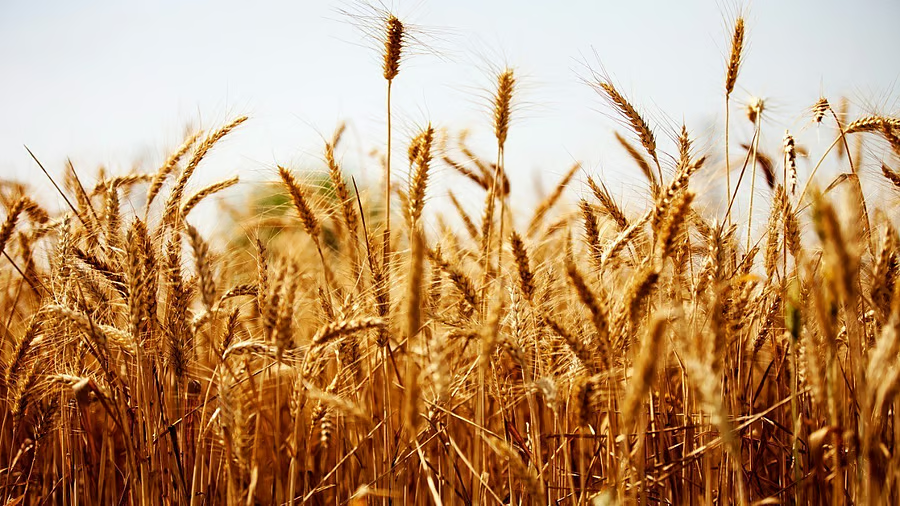
Key Update
Indians consume far less whole grain than recommended, according to a new white paper released in Mumbai. Titled Opportunities with Whole Grains to Support Metabolic Health among Indians: Evidence Mapping, the report was released by the Protein Foods and Nutrition Development Association of India in collaboration with ITC Limited, the Institute for Global Development, and Aravya at the ITC Food Safety and Analytical Laboratory.
Consumption Gap and Health Concerns
The report states that Indians consume an average of 42 grams of whole grains per day, which makes up only 10% of the total daily grain intake of 432 grams. In comparison, the National Institute of Nutrition under the Indian Council of Medical Research recommends 125 grams per day. Researchers warn that the low intake of whole grains may contribute to the increasing burden of non-communicable diseases such as obesity, diabetes, hypertension, and cardiovascular diseases. The shift from fibre-rich whole grains to refined grains plays a major role in this trend.
Loss of Nutrients During Processing
The paper highlights that processing grains removes the bran and germ, stripping them of essential nutrients such as vitamin B1, B6, folate, zinc, phosphorus, magnesium, niacin, selenium, and iron. As a result, people may consume enough calories but miss out on important nutrients. Experts at the event emphasised the role of millets such as ragi, bajra, and kutki in improving nutrition. Deepak Sawant, former Health Minister of Maharashtra, noted that these crops can grow in areas receiving as little as 20 centimetres of rainfall, making them suitable for climate-resilient agriculture. He also highlighted the work of the Annapurna Trust near Bangalore, which supports farmers by providing seeds and guaranteed procurement.
Recommendations for Policy and Public Awareness
The white paper recommends promoting fortified whole-grain flours, creating digital recipe tools, launching community-based nutrition programmes, and expanding nutrition counselling for women and vulnerable populations. It also calls for stronger policy support to improve whole-grain consumption and address India’s growing metabolic health challenges.
Source: Deccan Herald