Food Manifest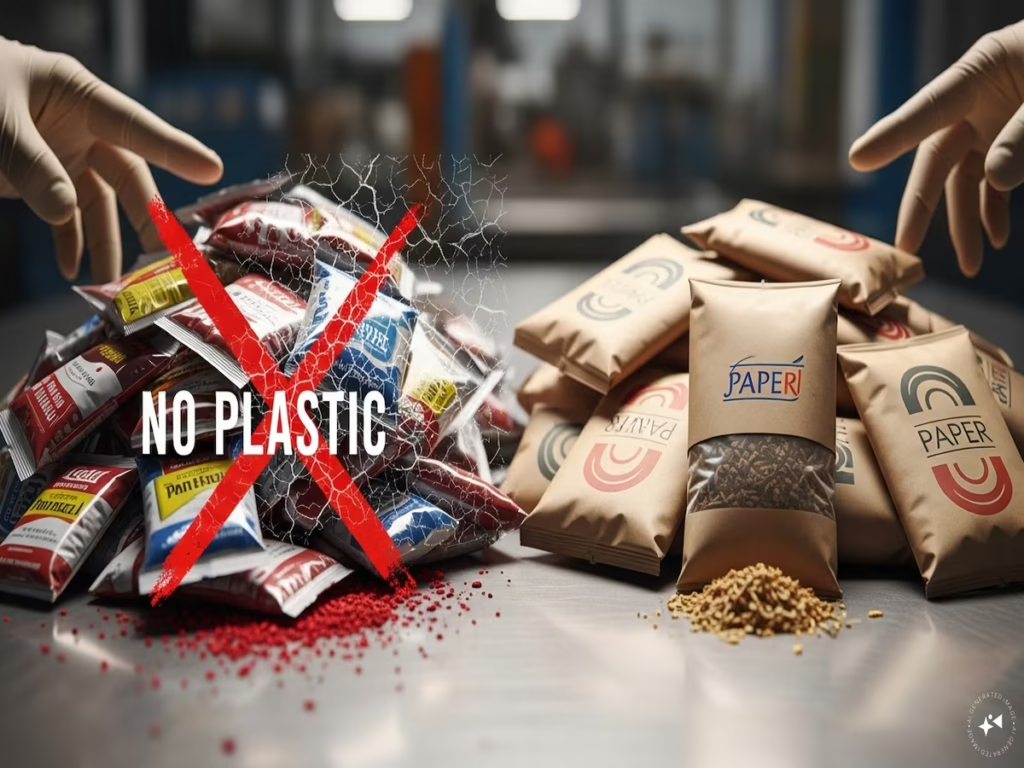
Key Update
The Food Safety and Standards Authority of India (FSSAI) has proposed a major shift away from single-use plastic in tobacco-related products. The authority has introduced a draft amendment to the Food Safety and Standards (Packaging) Regulations, 2018, mandating that manufacturers use only non-plastic materials for packaging pan masala, gutka, and similar products.
Ban on Plastics and Foil-Based Materials
Under the draft, manufacturers must pack these products in paper, paperboard, cellulose, or other naturally derived materials. The proposal explicitly bans all forms of plastic, including polyethene, polypropylene, polyester, PVC, and multilayer laminates. It also prohibits aluminium foil and metallised layers. Officials have clarified that these norms will apply to both tobacco and non-tobacco variants of pan masala and related products.
Stricter Material Controls Introduced
FSSAI has also banned the use of specific copolymers such as vinyl acetate–maleic acid–vinyl chloride in packaging. The authority has inserted these changes into Schedule IV of the regulations, which defines permitted packaging materials for specific food categories. It has now listed pan masala as a separate category with strict material restrictions. The draft reinforces existing plastic waste management rules by clearly stating that manufacturers cannot use plastic packaging for the storage, packing, or sale of these products. This step strengthens regulatory consistency across food safety and environmental frameworks.
Context: Ongoing State-Level Bans
The proposal comes at a time when several states—including Maharashtra, Bihar, Tamil Nadu, Andhra Pradesh, Telangana, Odisha, West Bengal, Kerala, Gujarat, and Delhi—have already banned the manufacture, sale, storage, and distribution of gutka and tobacco-containing pan masala. Many states continue to renew these bans annually.
Public Consultation and Industry Impact
FSSAI has invited objections and suggestions from stakeholders within 30 days of the notification. The authority will review all feedback before finalising the amendment. If implemented, the proposal will significantly impact the chewing tobacco and pan masala industry, which currently depends on multilayer plastic sachets that are difficult to recycle and contribute heavily to litter. With this move, FSSAI aims to address both public health and environmental concerns. By restricting plastic packaging in high-consumption products, the authority is pushing for safer materials while also reducing the burden of non-recyclable waste.
Source: The Times of India