Food Manifest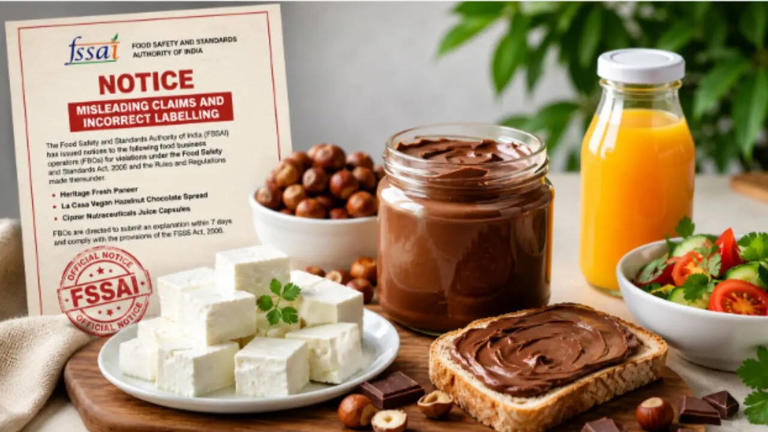
Key Update
The Food Safety and Standards Authority of India (FSSAI) has issued notices to Heritage Foods Ltd., Dia Foods, and Cipzer Nutraceuticals over alleged misleading product claims and labelling violations. The companies have been asked to explain within seven days why action should not be initiated under the Food Safety and Standards Act, 2006, and the applicable regulations.
The notices cover Heritage Fresh Paneer, La Casa Vegan Hazelnut Chocolate Spread, and Cipzer Juice Capsules. FSSAI said several claims on these products may mislead consumers and do not comply with food advertising and labelling requirements.
‘Fresh’ and ‘Healthy’ Claims Under Scrutiny
FSSAI has objected to Heritage Foods’ use of the term “Fresh Paneer”, stating that it does not meet the conditions prescribed under Schedule V for using the descriptor “fresh.” It also questioned the use of “Healthy” in the trademark “Healthy Happiness,” saying the claim could wrongly imply that the product inherently promotes or improves health, contrary to the Food Safety and Standards (Advertising and Claims) Regulations, 2018. The action follows consumer complaints as well as suo motu cognisance by the regulator.
Multiple Violations Flagged in Cipzer Product
FSSAI has raised several objections to Cipzer Juice Capsules, including the claim “FSSAI Approved,” which could falsely suggest official endorsement by the regulator. It has also questioned health claims such as “boost your immune system” and “remove toxins from your body” due to the lack of scientific evidence.
The regulator further noted that the packaging displays images of vegetables not listed among the ingredients, while the nutrition label does not adequately declare Vitamin E or its contribution to the Recommended Dietary Allowance (RDA). FSSAI also challenged the claim “Made with Organic Vegetables,” as the product does not display mandatory organic certification marks, including the Jaivik Bharat logo.
Chocolate Spread Claims Also Challenged
FSSAI has also scrutinised La Casa Vegan Hazelnut Chocolate Spread over claims such as “All Natural,” “100% Organic,” and “Vegan.” According to the regulator, the product does not meet the conditions for using the term “natural.” It also lacks the required approvals for marketing the product as organic or vegan under the FSSAI framework.
Referring to its advisory issued on 28 May, FSSAI noted that the term “100%” is not defined under the Food Safety and Standards Act or related regulations, making the claim “100% Organic” potentially misleading.
Focus on Transparent Food Labelling
The notices form part of FSSAI’s broader drive to curb misleading food claims and strengthen compliance with food labelling and advertising regulations. Companies must respond to the observations and take corrective measures wherever required.
What Consumers Should Check
Before buying packaged foods, consumers should:
- Read the ingredient list.
- Check the nutrition information panel.
- Verify allergen declarations.
- Look for the FSSAI licence number.
- Check certification marks such as Jaivik Bharat, where applicable.
- Be cautious of unsupported health and quality claims.
Key Takeaway
FSSAI’s latest action reinforces that food labels and advertising must be accurate, transparent, and compliant with regulations. For consumers, reading the complete label—not just front-of-pack claims—remains the best way to make informed food choices.
Source: