Food Manifest
Have you ever wondered why a slice of bread turns golden brown in the toaster or why grilled chicken tastes so much better than boiled chicken? Why do roasted coffee beans smell so inviting, and why do baked cookies have such a rich flavour? The answer lies in a fascinating food science phenomenon called the Maillard Reaction.
Although the name may sound complicated, the Maillard Reaction is something we experience almost every day. It is one of the most important chemical reactions in cooking because it creates the delicious flavours, pleasant aromas, and attractive brown colour that make many foods so enjoyable. Understanding this process helps explain why cooked foods develop their unique taste, aroma, and appearance. It also reminds us that while browning is desirable, proper cooking and avoiding excessive charring are equally important.
What is the Maillard Reaction?
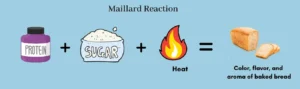
The Maillard Reaction is a chemical reaction that takes place when amino acids (the building blocks of proteins) react with reducing sugars in the presence of heat. This reaction usually begins when the cooking temperature rises above about 140°C, although the exact temperature depends on the food, its moisture content, and other conditions.
As the reaction progresses, it produces hundreds of new compounds that give cooked food its distinctive taste, smell, and brown colour. This is why foods that are roasted, grilled, baked, or toasted often taste richer and more complex than foods that are boiled or steamed. The reaction is named after French chemist Louis-Camille Maillard, who first described it in 1912 while studying how proteins and sugars interact.
Where Do We See It?
The Maillard Reaction occurs in many foods we eat every day. Some common examples include:
- Toasted bread developing a crisp, golden crust.
- Rotis and parathas browning on the tawa.
- Roasted coffee beans producing their familiar aroma.
- Grilled, roasted, or fried meat forming a browned surface.
- Baked cakes, biscuits, and cookies developing colour and flavour.
- Pizza crust becoming crisp and golden.
- Roasted potatoes and French fries turning brown.
- Roasted nuts developing a deeper flavour.
In all these foods, the Maillard Reaction enhances the eating experience by improving both flavour and appearance.
Does Browning mean Food is Safe?
One common misconception is that if food has turned brown, it is fully cooked and safe to eat. This is not always true. For example, a grilled chicken breast or burger may develop a nicely browned surface because of the Maillard Reaction, while the inside may still be undercooked. Harmful bacteria are destroyed only when food reaches the recommended internal temperature—not simply because it has changed colour. This is why food safety experts recommend using proper cooking temperatures rather than judging doneness by appearance alone.
Why is the Maillard Reaction Important?
Without the Maillard Reaction, many cooked foods would look pale and taste much less appealing. The reaction contributes to:
- Rich flavour: It creates hundreds of flavour compounds that give foods their characteristic taste.
- Pleasant aroma: The tempting smell of fresh bread, roasted coffee, or grilled food comes largely from this reaction.
- Attractive colour: The golden-brown appearance often signals that food has been cooked properly.
- Better texture: It helps create crispy crusts on bread, cookies, and roasted foods.
These qualities make food more enjoyable and encourage people to eat a balanced diet that includes properly cooked foods.
Maillard Reaction vs. Caramelisation
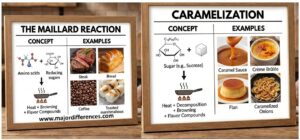
People often confuse the Maillard Reaction with caramelisation because both cause food to turn brown. However, they are different processes. The Maillard Reaction involves proteins and sugars reacting together under heat. It produces a wide variety of flavours and aromas and is responsible for the browning seen in foods such as bread, meat, and baked products.
Caramelisation, on the other hand, occurs when sugars alone are heated to high temperatures. It creates the sweet, caramel-like flavour found in caramel sauce, toffee, and melted sugar. In simple terms, if proteins are involved, it is usually the Maillard Reaction. If only sugar is involved, it is caramelisation.
Does it Affect Nutrition?
Cooking naturally changes the nutritional properties of food. During the Maillard Reaction, small amounts of certain amino acids, especially lysine, may become less available to the body. However, under normal cooking conditions, this reduction is generally not significant enough to outweigh the benefits of eating properly cooked food.
In fact, cooking also improves the digestibility of many foods and destroys harmful microorganisms that may be present in raw ingredients. The key is to cook food appropriately rather than excessively.
When does the Maillard Reaction become a Concern?
The Maillard Reaction itself is a natural and desirable part of cooking. However, problems can arise when foods are cooked at very high temperatures for too long.
Starchy foods such as potatoes may form acrylamide when they are fried, baked, or roasted until they become dark brown. Similarly, heavily charred meat may contain compounds such as heterocyclic amines (HCAs) and polycyclic aromatic hydrocarbons (PAHs), which researchers have linked to potential health risks when consumed frequently over time.
This does not mean you should avoid grilled or roasted foods. Instead, aim for a golden-brown colour rather than letting food burn or turn black.
Getting the Best Flavour Safely
You can enjoy the benefits of the Maillard Reaction while reducing unnecessary risks by following a few simple practices:
- Aim for a golden-brown colour instead of dark brown or burnt food.
- Avoid prolonged cooking at very high temperatures.
- Turn food regularly while grilling to prevent charring.
- Remove burnt portions before eating.
- Follow recommended cooking times and temperatures for different foods.
These simple habits help preserve flavour while supporting safer cooking practices.
The Takeaway
The Maillard Reaction is one of the most fascinating examples of food science in action. It transforms ordinary ingredients into foods with rich flavours, inviting aromas, crisp textures, and an appealing golden-brown colour.
At the same time, it is important to remember that browning and food safety are not the same thing. A browned surface does not always mean food has been cooked thoroughly. Always cook foods to the recommended internal temperature, avoid excessive charring, and aim for a golden-brown finish instead of a burnt one.
Understanding the Maillard Reaction helps us appreciate the science behind cooking while making informed choices that support both food quality and food safety.