Food Manifest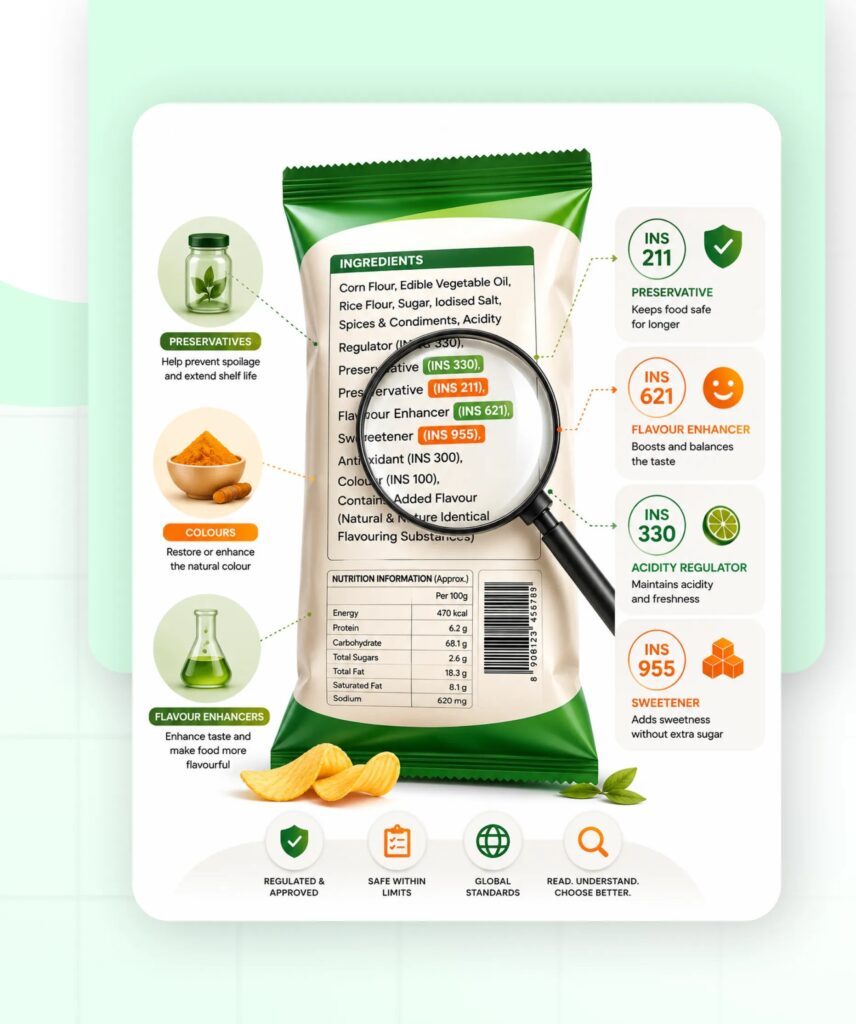
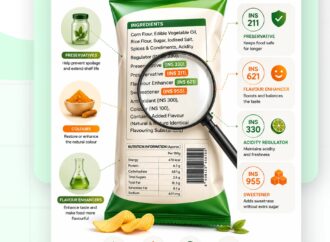
INS 330. INS 211. INS 621. If you have looked at a packaged food’s ingredient list, you may have noticed numbers like these. Each number identifies a specific food additive and forms part of the International Numbering System (INS) for Food Additives. The system provides standardised numerical codes for individual additives, making them easier to identify across food labels and regulatory systems.
Food additives can preserve food, control acidity, maintain colour, improve texture or enhance flavour. However, an INS number only identifies the additive; it does not indicate whether it is safe, unsafe, natural or synthetic. So, what should you understand when you see one?
What is an INS number?
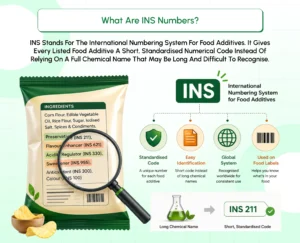
The International Numbering System provides numerical identifiers for food additives. The Codex Alimentarius Commission maintains the system. Scientific bodies such as the Joint FAO/WHO Expert Committee on Food Additives (JECFA) evaluate additive safety, while individual countries establish regulations governing their use. In India, the Food Safety and Standards Authority of India (FSSAI) regulates food additives and specifies their permitted uses.
An INS number is primarily an identification code. It tells you which additive a number represents rather than providing a health rating or indicating that manufacturers can use it without restrictions. For example, INS 330 refers to citric acid, INS 211 refers to sodium benzoate, and INS 621 refers to monosodium glutamate (MSG). Each additive serves a different purpose in food.
Why are food additives used?
Manufacturers use food additives for specific technological purposes, including maintaining food quality, stability, appearance, and shelf life. For instance, preservatives can slow microbial growth and protect certain foods from spoilage. Antioxidants can slow oxidation, which may affect the flavour, colour, and quality of foods containing fats and oils.
Similarly, emulsifiers help ingredients that do not naturally mix well, such as oil and water, remain evenly distributed. Stabilisers and thickeners help foods maintain their texture and consistency, while colourants can add or restore colour. Acidity regulators control acidity, influencing characteristics such as taste and stability. Knowing these functions also makes it easier to understand the INS numbers you may encounter on everyday food labels.
Common INS numbers you may encounter
You do not need to memorise the entire INS system. Recognising a few common numbers can help you understand ingredient lists more easily.
INS 100 – Curcumin: used as a colour.
INS 211 – Sodium benzoate: used as a preservative.
INS 300 – Ascorbic acid: used as an antioxidant and for other technological purposes.
INS 322 – Lecithins: commonly used as an emulsifier.
INS 330 – Citric acid: commonly used as an acidity regulator.
INS 407 – Carrageenan: used as a thickener or stabiliser.
INS 621 – Monosodium glutamate: used as a flavour enhancer.
These examples show why it is more useful to identify an additive and understand its function than to judge a product based on its number alone.
Does an INS number mean an additive is harmful?
This is one of the most important misconceptions to clear up. An INS number is not a warning code, safety rating, or measure of how harmful an additive is. A three-digit number on a label does not automatically mean that an additive is dangerous or artificial. Instead, it provides a standardised way to identify the substance.
Whether an additive can be used safely depends on factors such as the substance itself, the amount used, the food category, and the conditions established by regulations. Authorities may permit an additive for particular food categories and specified conditions rather than for unrestricted use. Therefore, seeing INS 330 or INS 322 on a label does not automatically mean that the food is unsafe. At the same time, the presence of an INS number does not mean that manufacturers can use an additive without restrictions.
Are INS-numbered additives always artificial?
No. The INS system does not classify additives according to whether they come from natural or synthetic sources. Some additives occur naturally or can be derived from natural sources, while others are manufactured.
For example, INS 100 identifies curcumin, while INS 300 identifies ascorbic acid. However, whether an ingredient comes from a natural or synthetic source does not, by itself, determine its safety. Consumers should therefore avoid judging an ingredient solely by whether it sounds natural, chemical, or unfamiliar. Instead, consider what the ingredient is, why it is used, and whether regulations permit its use in that food.
How should you read an INS number on a label?
Start with the ingredient list, where an additive may appear by its name, INS number, or both, depending on the applicable labelling requirements. When you come across an unfamiliar number, first identify the additive it represents. Next, consider what function it serves in the food and whether regulations permit its use in that particular food category. This approach gives you more useful information than treating every unfamiliar number as a warning.
INS numbers are only one part of the label
Understanding INS numbers can make ingredient lists less confusing, but one additive does not determine a food’s overall nutritional quality. You should also consider sugar, salt, fat, fibre, calories and serving size when evaluating a packaged food. An additive does not tell you whether a product is high in sugar or salt. Similarly, the absence of unfamiliar INS numbers does not automatically make a product nutritionally better. Reading the ingredient list alongside the nutrition information gives you a fuller picture of the product.
Understand the number, not fear it
INS numbers provide a standardised way to identify food additives. Rather than treating an unfamiliar number as a reason for concern, use it as a starting point for understanding what is in the food. The next time you see an INS number on a label, find out which additive it represents, understand the function it performs, and consider whether its use is permitted under applicable food-safety regulations. The goal is not to fear unfamiliar numbers. It is to understand them and make informed choices.