Food Manifest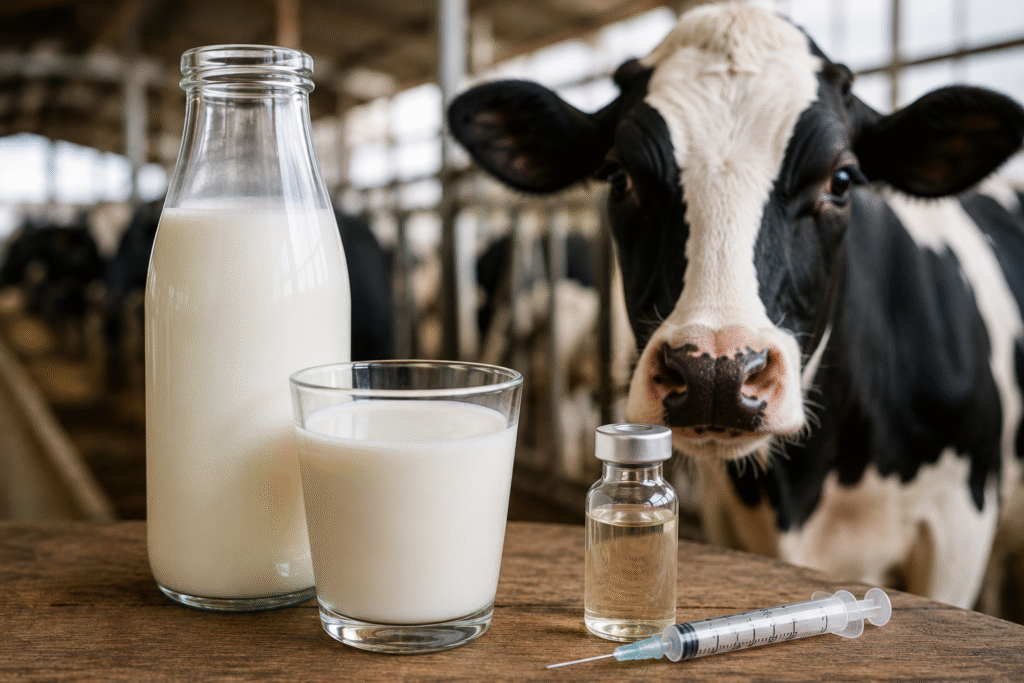
Overview
The recent seizure of more than 600 suspected Oxytocin injection bottles from a dairy in Maharashtra’s Ulhasnagar has renewed concerns about the illegal use of the hormone in dairy animals. The incident has also raised an important question: Is milk from Oxytocin-treated cattle unsafe to drink? While social media often amplifies alarming claims, scientific evidence presents a more nuanced picture.
What Is Oxytocin and Why Is It Used in Dairy Animals?
Oxytocin is a naturally occurring hormone found in both humans and animals. In humans, it triggers labour contractions and helps mothers release milk during breastfeeding.
In cows and buffaloes, Oxytocin stimulates the milk let-down reflex by causing the muscles around the milk-producing glands to contract, allowing milk to flow more easily during milking.
Some dairy operators illegally administer synthetic Oxytocin shortly before milking to speed up milk extraction. However, the Food Safety and Standards Authority of India (FSSAI) permits its use only for therapeutic purposes under the supervision of a registered veterinarian. Using the hormone to increase milk yield or for routine milking is prohibited.
Does Oxytocin Increase Milk Production?
No. Veterinary experts say Oxytocin does not increase an animal’s milk production. Instead, it releases milk that has already been produced.
Although repeated injections may help extract milk faster or more completely during a milking session, they do not improve the animal’s long-term milk-producing capacity. Frequent misuse can also affect animal welfare and constitutes the misuse of a prescription drug.
Is Milk From Oxytocin-Treated Animals Harmful?
The scientific evidence remains mixed. A study published in the Indian Journal of Medical Research found no measurable difference in Oxytocin levels between milk from injected buffaloes and milk from untreated animals. Researchers explained that injected Oxytocin breaks down in the bloodstream within five to seven minutes, leaving little opportunity for the hormone to pass into milk.
Scientists at the National Dairy Research Institute (NDRI) have also reported that Oxytocin naturally occurs in milk and that controlled studies have not established harmful changes in milk composition or animal health due to therapeutic use. However, they warned that repeated, unsupervised administration could make animals dependent on injections for milk let-down.
Why Do Experts Still Raise Concerns?
Not all studies reach the same conclusion.
A toxicology study conducted in Lucknow detected Oxytocin residues in market milk samples and estimated that young children could face the highest exposure. Researchers recommended setting regulatory limits because India has not established a safe threshold for Oxytocin residues in food.
Some smaller studies have also linked prolonged exposure to hormonal disturbances, changes in milk composition and reproductive effects. However, these findings require further large-scale scientific validation.
Why Regulators Continue to Crack Down
Despite the lack of conclusive evidence linking Oxytocin-treated milk to adverse health effects in consumers, regulators continue to treat its illegal use as a public health concern.
Experts point out that no universally accepted safe limit exists for Oxytocin residues in food, and methods for detecting trace hormone levels remain inconsistent. For this reason, authorities discourage the unsupervised use of the hormone in dairy animals and continue to enforce strict regulations against its misuse.
What Consumers Should Know
The seizure in Ulhasnagar does not confirm that contaminated milk reached consumers. Authorities have yet to complete laboratory analysis of the seized samples, and the investigation remains ongoing.
For consumers, the safest approach is to purchase milk from licensed and regulated suppliers, where dairy practices are subject to official oversight.
Source: News18