Food Manifest
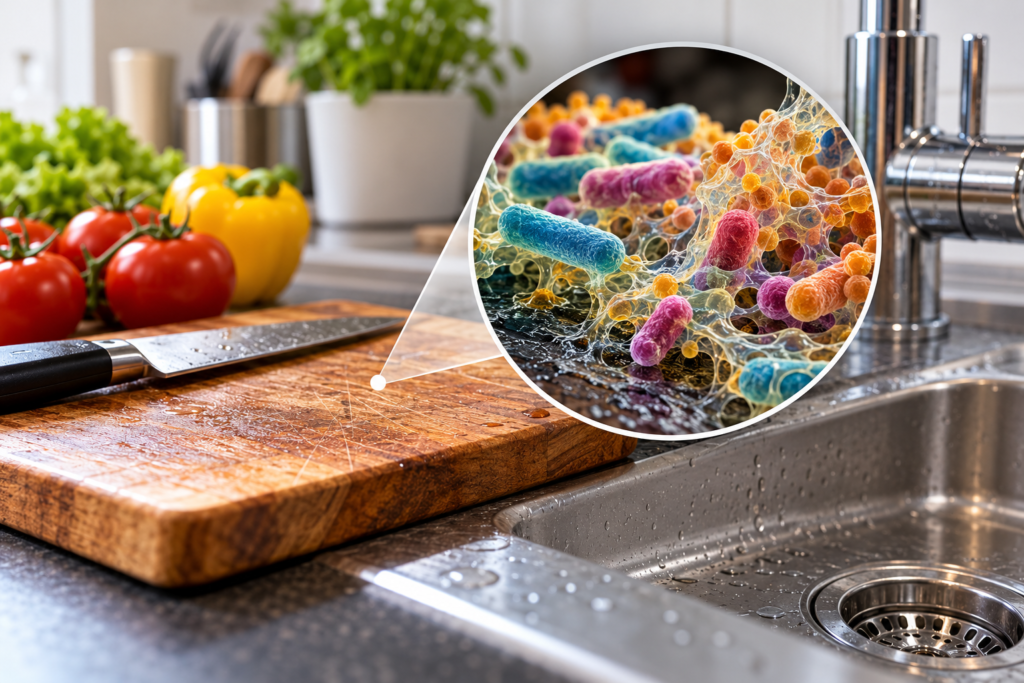
We clean kitchen counters, wash cutting boards and scrub utensils to keep food safe. When these surfaces look clean, we often assume they are free from harmful bacteria. However, some bacteria can attach to surfaces and form protective layers that are difficult to remove.
Known as bacterial biofilms, these layers can develop in kitchens, food-processing facilities and other places where people handle food. Although we cannot always see them, biofilms can allow bacteria to persist on surfaces despite routine cleaning. Understanding how they form and why they matter can help us improve food hygiene and reduce contamination risks.
What Exactly Is a Bacterial Biofilm?

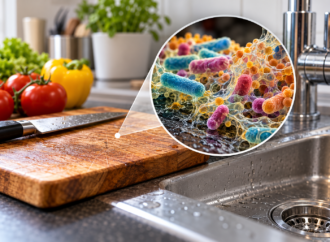
A bacterial biofilm is a community of microorganisms that attach to a surface and surround themselves with a protective, sticky substance. When certain bacteria settle on a surface, they produce materials that help them stick together. Over time, other microorganisms may join the community, forming a more structured layer.
This protective material helps bacteria remain attached to surfaces and makes them harder to remove through simple rinsing or inadequate cleaning. Biofilms can develop on stainless steel, plastic, glass, and rubber, including surfaces that appear clean to the naked eye. However, not all biofilms contain harmful bacteria. They become a food safety concern when they harbour pathogens or contribute to food contamination.
How Do Biofilms Develop?
Biofilm formation begins when bacteria encounter a surface that allows them to attach and survive. Moisture, food residues and inadequate cleaning can create favourable conditions for this process. Once bacteria settle, some produce a sticky material that helps them remain attached. As the community develops, this protective layer becomes more organised and may trap moisture and nutrients. Under suitable conditions, the bacteria can survive and multiply.
For example, a deeply scratched cutting board may retain tiny food particles and moisture after use. If cleaning fails to remove these residues, bacteria may attach to the surface and contribute to biofilm formation. Kitchen sinks, drains and food-processing equipment can also provide favourable conditions when moisture and food residues accumulate. However, biofilms do not necessarily form after a single use or on every poorly cleaned surface. Their development depends on the microorganisms present, the surface material and the surrounding conditions.
Where Can Biofilms Form in the Kitchen?
Biofilms can develop in areas where moisture, food residues, and frequently used surfaces create opportunities for microorganisms to attach.
Cutting boards: Repeated chopping can create scratches and grooves that trap food particles, making thorough cleaning more difficult.
Kitchen sinks and drains: Moisture and accumulated food particles can support microbial communities, making these areas potential sites for biofilm formation.
Reusable food containers: Poorly cleaned lids, narrow corners, and damaged surfaces may retain residues that encourage bacterial attachment.
Refrigerator seals: Moisture and trapped food particles around rubber seals can support microbial growth.
Water dispensers: Internal surfaces, pipes, and dispensing outlets may develop biofilms if cleaning and maintenance are inadequate.
Similar problems can occur in commercial kitchens and food-processing facilities, where equipment may contain joints, pipes, and other hard-to-reach areas.
Why Are Biofilms a Food Safety Concern?
Biofilms can allow potentially harmful bacteria to persist in food-handling environments. Certain foodborne pathogens, including Listeria monocytogenes and Salmonella, can form or become associated with biofilms under suitable conditions. For example, Listeria monocytogenes can persist in food-processing environments, particularly in moist areas and on equipment that is difficult to clean.
Bacteria within biofilms may tolerate some cleaning and sanitising treatments better than bacteria that are not attached to surfaces. If bacteria or fragments of a biofilm detach, they may spread to other surfaces or contaminate food. This is particularly concerning when people handle ready-to-eat foods, such as salads and cooked foods, which may not undergo further cooking before consumption. Nevertheless, finding a biofilm does not automatically mean that food is contaminated or unsafe. The actual risk depends on the microorganisms present and whether they can reach the food.
Why Can Biofilms Be Difficult to Remove?
Biofilms can be harder to remove than bacteria on exposed surfaces because their protective material helps them remain firmly attached. This structure can also reduce the effectiveness of some sanitising treatments. Rinsing a surface with water may leave residues and microorganisms behind. Similarly, applying a sanitiser without first removing food particles and other deposits may reduce its effectiveness.
This is why cleaning and sanitising serve different purposes. Cleaning removes food residues, grease and dirt, along with many microorganisms. Sanitising reduces microorganisms to appropriate levels. For food-contact surfaces that require sanitising, thorough cleaning must come first. Using suitable products and following the manufacturer’s instructions are equally important. Effective cleaning removes residues that can support microbial accumulation, while appropriate sanitising provides an additional measure of protection.
How Can We Prevent Biofilm Formation?
Preventing biofilms starts with consistent cleaning and good kitchen hygiene. Removing food residues, controlling moisture and maintaining equipment can reduce the conditions that allow microorganisms to accumulate. Follow these practical steps:
- Clean surfaces after use: Wash cutting boards, utensils, and kitchen counters with suitable cleaning products. Pay attention to grooves, corners, and joints where residues may remain.
- Replace damaged cutting boards: Deep scratches and cracks can make thorough cleaning difficult. Replace boards when their condition prevents effective cleaning.
- Maintain sinks and drains: Remove food particles regularly and clean these areas appropriately to limit residue accumulation.
- Clean reusable containers thoroughly: Wash lids, seals, and narrow corners carefully. Allow containers to dry properly before storing them.
- Maintain kitchen equipment: Follow the manufacturer’s cleaning and maintenance instructions for water dispensers, refrigerators, and other appliances.
In commercial food establishments, documented cleaning schedules and regular checks can help staff identify areas that require additional attention, particularly equipment that is difficult to access. Remember that appearance alone cannot confirm that a surface is hygienically clean. Consistent cleaning and appropriate sanitising are essential for reducing contamination risks.
The Bottom Line
Bacterial biofilms are communities of microorganisms that attach to surfaces and develop a protective layer. While not all biofilms pose a food safety risk, those containing harmful bacteria can contribute to contamination and make routine cleaning less effective. Moisture, food residues and hard-to-clean areas can encourage their development in home kitchens and commercial food establishments. Thorough cleaning, appropriate sanitising and regular equipment maintenance can help control the problem. Paying attention to how we clean and maintain kitchen surfaces helps make food preparation safer.