Food Manifest
Most people replace kitchen tools only when they become unusable. A cracked bowl, a broken spatula, or a loose knife handle usually gets immediate attention. However, one kitchen item often remains in use long after it should be replaced – the cutting board.
Whether you use a wooden or plastic cutting board, it comes into contact with food almost every day. You use it to chop vegetables, slice fruits, prepare meat, and assemble meals for your family. Because it plays such a central role in food preparation, its condition can directly affect kitchen hygiene and food safety.
Over time, every cutting board begins to show signs of wear. Repeated knife use creates scratches, grooves, and surface damage that may not seem serious at first. Yet these seemingly harmless marks can make cleaning less effective and increase the risk of contamination. Understanding when a cutting board has reached the end of its useful life is an important part of maintaining a safe kitchen.
Why Cutting Boards Matter for Food Safety
A cutting board is one of the most frequently used food-contact surfaces in the kitchen. During food preparation, it comes into contact with raw vegetables, fruits, meat, poultry, seafood, and ready-to-eat foods. Every use leaves behind tiny food particles, moisture, and food juices that must be removed through proper cleaning.
When a cutting board has a smooth, well-maintained surface, cleaning is relatively straightforward. Detergent and water can effectively remove residues and help keep the surface hygienic. However, as the board ages and accumulates knife marks, maintaining the same level of hygiene becomes more challenging.
Food residues can settle into deep grooves and damaged areas. Even after washing, some contaminants may remain hidden within these imperfections. Moisture can also collect in these spaces, creating conditions that may allow microorganisms to survive. Over time, this can increase food safety risks, particularly when the same board is used for different types of food.
The Hidden Risks of Deep Grooves and Cracks
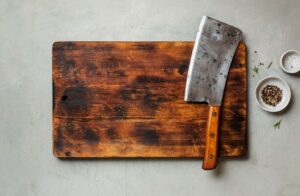
Knife marks are a normal part of using a cutting board. In fact, no cutting board remains perfectly smooth forever. Problems arise when these marks become deep enough to interfere with effective cleaning and sanitation. Deep grooves can:
- Trap food residues and moisture
- Reduce cleaning effectiveness
- Increase the risk of cross-contamination
- Provide areas where microorganisms can persist
Cracks, splits, and chips present even greater concerns. These damaged areas are often difficult to reach during routine washing and sanitising. As a result, maintaining proper hygiene becomes increasingly challenging.
For example, if a board is used to prepare raw chicken and later used for vegetables or ready-to-eat foods, contamination can potentially transfer from one food to another. While proper cleaning helps reduce this risk, severely damaged boards may no longer be easy to sanitise effectively.
What About Plastic Cutting Boards?
Plastic cutting boards are widely used in both homes and commercial kitchens. They are lightweight, affordable, and easy to maintain. Many food businesses also use colour-coded plastic cutting boards to separate different food categories and reduce the risk of cross-contamination.
However, plastic cutting boards are not immune to wear and tear. Repeated cutting gradually creates scratches and grooves on the surface, reducing its cleanability over time. Although a worn plastic board may still appear usable, excessive surface damage can make it harder to maintain hygienically.
For this reason, plastic boards should be inspected regularly and replaced when signs of significant wear become apparent. The same principle applies to any cutting board, regardless of the material used.
Signs That It Is Time to Replace Your Cutting Board
Many people wait until a cutting board breaks before considering a replacement. In reality, food safety concerns often appear much earlier. Regular inspection can help you identify when a board has become too worn for continued use.
Deep Knife Marks
Numerous deep cuts and grooves can reduce the effectiveness of cleaning. If the surface resembles a network of trenches rather than a relatively smooth board, replacement should be considered.
Cracks and Splits
Damaged surfaces can compromise hygiene by creating areas that are difficult to access during routine cleaning and sanitising.
Warping
A warped cutting board may not sit flat on the countertop. Apart from creating an unstable work surface, warping can indicate that the board has experienced significant wear or moisture damage.
Difficulty Cleaning
If the board remains difficult to clean despite proper washing and maintenance, it may no longer be suitable for safe food preparation.
Heavy Staining and Surface Damage
While staining alone does not necessarily indicate a food safety problem, persistent staining combined with deep scratches, cracks, or other visible damage may signal that the board is reaching the end of its useful life.
Wood or Plastic: Which Is Better?

The debate over wooden versus plastic cutting boards has existed for years. While both materials have their advantages and limitations, there is no single answer that applies to every situation.
Wooden boards are often valued for their durability and appearance, while plastic boards are popular for being lightweight and easy to sanitise. Regardless of the material, however, every cutting board eventually wears down and requires replacement.
From a food safety perspective, the condition of the board is often more important than the material itself. A damaged wooden board can present many of the same hygiene concerns as a damaged plastic board. Likewise, a clean, well-maintained board of either type can provide a safe surface for food preparation. Rather than focusing solely on the material, it is more important to pay attention to the condition of the board and replace it when necessary.
How to Extend the Life of Your Cutting Board
Although no cutting board lasts forever, proper care can help keep it safe and functional for longer. Some simple practices include:
- Wash the board thoroughly after each use.
- Use detergent and warm water to remove food residues.
- Dry the board completely before storing it.
- Use separate cutting boards for raw meat and ready-to-eat foods whenever possible.
- Inspect the surface regularly for signs of damage.
- Replace the board when deep grooves, cracks, or excessive wear develop.
These simple habits can help maintain hygiene and reduce the risk of cross-contamination during food preparation.
The Bottom Line
A cutting board is one of the hardest-working tools in the kitchen, yet it is often overlooked when it comes to maintenance. While scratches and knife marks are a normal part of regular use, excessive wear can affect how easily the board can be cleaned and sanitised.
Regular inspection can help you identify problems before they become food safety concerns. Visible wear, deep grooves, cracks, warping, and other signs of deterioration indicate that it may be time for a replacement.
Ultimately, safer food preparation starts with clean and well-maintained food-contact surfaces. Whether your cutting board is made of wood or plastic, keeping it in good condition and replacing it when necessary is a simple step that can help support better kitchen hygiene and reduce the risk of contamination.