Food Manifest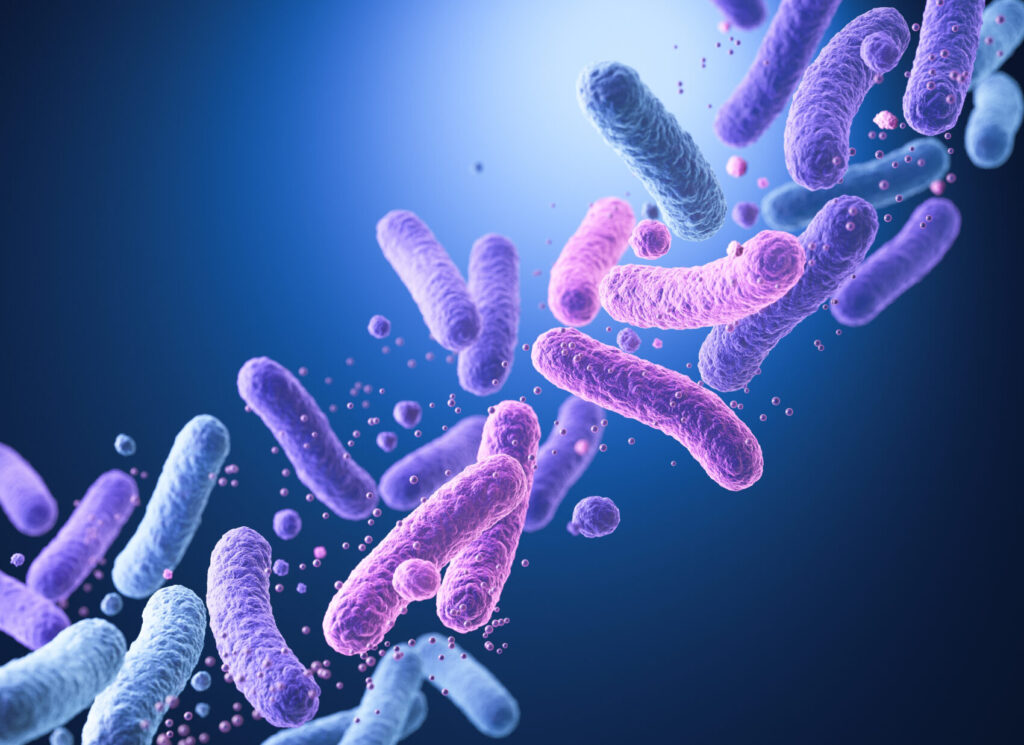
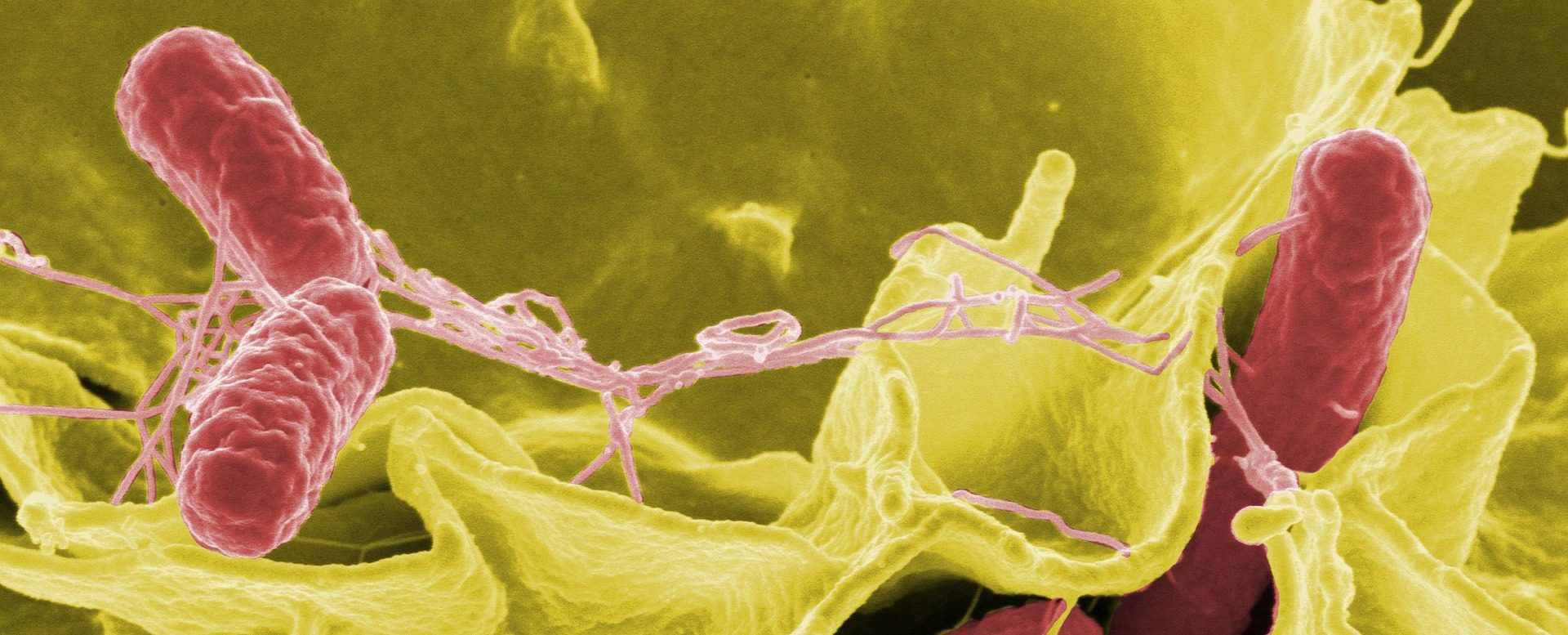
When people think about food poisoning, they often blame undercooked meat, contaminated water, or spoiled food. However, a lesser-known bacterium called Bacillus cereus also causes thousands of foodborne illness cases every year. This microorganism commonly exists in soil, dust, water, and vegetation, making it difficult to keep completely out of the food chain.
Although infections caused by Bacillus cereus are usually mild, they can lead to unpleasant symptoms such as vomiting, diarrhoea, and stomach cramps. Understanding how this bacterium enters food and how to prevent its growth can help reduce the risk of foodborne illness.
What is Bacillus cereus?
Bacillus cereus is a bacterium that naturally occurs in the environment. It forms protective spores that can survive harsh conditions, including cooking temperatures that would normally kill many other bacteria. These spores can remain dormant in food and become active when conditions are favourable. If cooked food remains at unsafe temperatures for long periods, the spores can germinate, multiply, and produce toxins that cause illness. The bacterium affects a wide variety of foods, but it most commonly appears in rice, pasta, noodles, cereals, dairy products, vegetables, spices, and cooked dishes that remain unrefrigerated for extended periods.
How Does It Cause Food Poisoning?
Bacillus cereus causes two distinct types of foodborne illness.
Emetic (Vomiting) Syndrome
In this form, the bacterium produces a toxin in food before it is consumed. After eating contaminated food, symptoms usually develop within 1 to 6 hours. Common symptoms include:
- Nausea
- Vomiting
- Stomach discomfort
Cooked rice is one of the foods most frequently associated with this type of illness. This is why people sometimes refer to it as “fried rice syndrome.”
Diarrhoeal Syndrome
In this form, the bacteria enter the digestive system and produce toxins inside the intestine. Symptoms generally appear within six to fifteen hours and may include:
- Watery diarrhoea
- Abdominal cramps
- Mild nausea
Most people recover within 24 hours without medical treatment.
Why Is Rice Often Linked to Bacillus cereus?
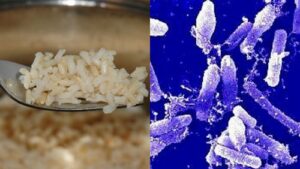
Rice naturally carries Bacillus cereus spores from the environment. Cooking destroys most bacteria but may not eliminate all spores. Problems arise when cooked rice sits at room temperature for several hours. During this period, the spores can germinate and multiply rapidly. Some strains produce toxins that remain active even after reheating. As a result, reheating contaminated rice may not make it safe to eat. The same risk applies to other cooked starchy foods such as pasta, noodles, and potatoes.
Foods Commonly Associated with Bacillus cereus
Several foods can support the growth of Bacillus cereus when handled improperly, including:
- Cooked rice
- Fried rice
- Pasta and noodles
- Potatoes
- Breakfast cereals
- Milk and dairy products
- Soups and sauces
- Cooked vegetables
- Spices and seasonings
- Meat dishes held at room temperature
The risk increases when these foods remain in the temperature danger zone for extended periods.
How Can You Prevent Bacillus cereus Food Poisoning?
Good food handling and proper temperature control remain the most effective ways to prevent Bacillus cereus contamination.
Cool Food Quickly
After cooking, cool food as quickly as possible. Avoid leaving cooked food at room temperature for more than two hours. Divide large quantities into shallow containers to speed up cooling.
Refrigerate Promptly
Store cooked food in a refrigerator at 5°C or below. Cold temperatures slow bacterial growth and reduce the risk of toxin production.
Reheat Thoroughly
When reheating leftovers, ensure the food becomes steaming hot throughout. Although reheating may not destroy all toxins, it can eliminate actively growing bacteria.
Maintain Hot Holding Temperatures
Keep hot foods above 60°C if they are not served immediately. Proper hot holding prevents bacterial multiplication.
Follow Good Hygiene Practices
Wash your hands thoroughly before handling food. Clean utensils, containers, and food-contact surfaces regularly to prevent contamination.
Use Leftovers Safely
Consume refrigerated leftovers within a reasonable period and avoid repeatedly cooling and reheating the same food.
Why Food Businesses Should Be Concerned
Restaurants, catering services, canteens, and food manufacturers often prepare large batches of food in advance. Improper cooling, storage, or reheating can create ideal conditions for Bacillus cereus growth. Food businesses should establish clear procedures for:
- Temperature monitoring
- Rapid cooling
- Safe storage
- Hygienic handling
- Staff training
Regular food safety audits and employee awareness programmes can help identify and control these risks before they lead to foodborne illness outbreaks.
Conclusion
Bacillus cereus may not receive as much attention as some other foodborne pathogens, but it remains a significant food safety concern. Because its spores can survive cooking and its toxins can develop when food is handled improperly, simple mistakes in storage and temperature control can lead to illness. Whether at home or in a food business, following basic food safety practices such as rapid cooling, proper refrigeration, and safe reheating can significantly reduce the risk. Paying attention to these simple steps helps keep food safe and protects consumers from preventable food poisoning.