Food Manifest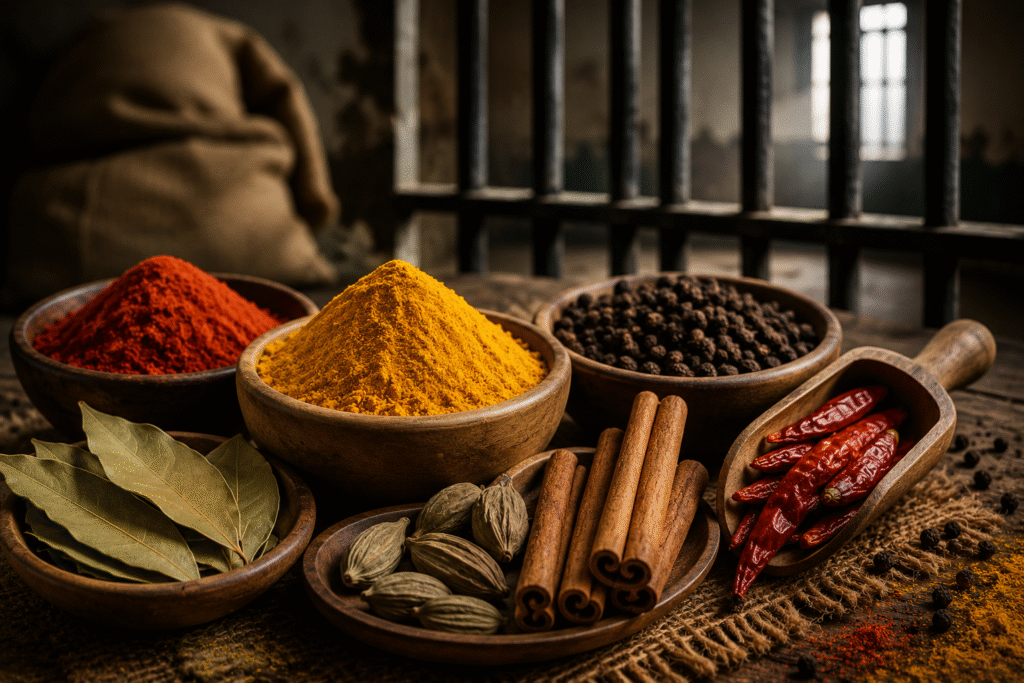
Key Update
A recent report has raised concerns about the quality of spices supplied to prisons in Uttar Pradesh after several samples failed food quality tests conducted by a government laboratory.
According to media reports, the Uttar Pradesh Prisons Administration and Reforms Department supplied spice consignments to prisons across the state in November last year. The Regional Food Research and Analysis Centre in Lucknow tested the samples and found that several did not meet quality standards. However, a second test conducted by an NABL-accredited private laboratory in Hapur cleared the same batch.
Which Spices failed the Initial Tests?
The government laboratory reported that the following spices failed quality tests:
- Turmeric (Haldi)
- Red chilli (Lal mirch)
- Bay leaf (Tej patta)
- Black pepper (Kali mirch)
- Cinnamon (Dal chini)
- Large cardamom (Badi elaichi)
What did the Laboratory Find?
The Lucknow laboratory found extraneous matter—unwanted foreign material—in quantities much higher than the limits permitted under FSSAI standards. It also detected insect-damaged matter beyond the permissible limits in several samples. According to the report:
- Cinnamon contained over 50% extraneous matter, against the permissible limit of 1%.
- Bay leaf samples contained 32–43% insect-damaged leaves, while the permissible limit is 10%.
- Turmeric, black pepper, large cardamom, and red chilli also exceeded the prescribed limits for extraneous matter or insect-damaged matter.
Officials refer to Second Laboratory Test
Additional Inspector General (Prisons Administration and Reform Services) Dharmendra Singh said the department cancelled the earlier order after some samples failed the initial tests and got the batch tested again. He stated that an NABL-accredited private laboratory in Hapur tested the subsequent samples and found that they met all the required quality parameters. Officials also clarified that the department can send samples either to government laboratories or NABL-accredited private laboratories for testing.
Why is this Important?
Food safety standards set limits for extraneous matter and insect-damaged matter because high levels may indicate poor quality, contamination, or improper storage. The findings have attracted attention because Uttar Pradesh has received recognition under FSSAI’s Eat Right Campus initiative, and several prisons in the state have earned high food safety ratings in recent years.
Although the initial government laboratory reported quality concerns, officials maintain that the spices met the required standards after the second round of testing. The differing test results highlight the importance of consistent food quality testing and effective food safety oversight.
Source: The Indian Express