Food Manifest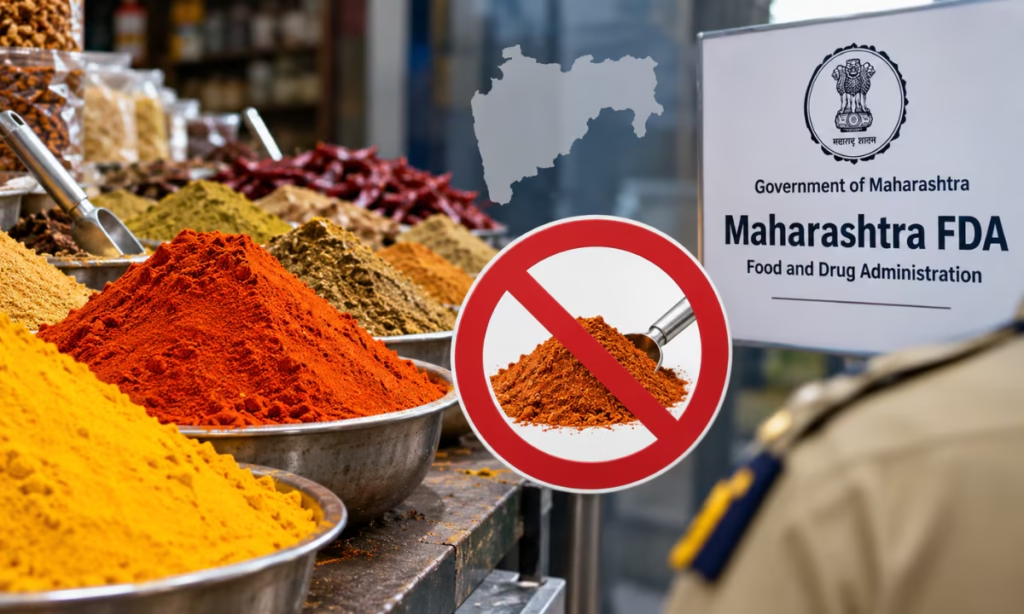
Key Update
The Maharashtra Food and Drug Administration (FDA) has banned the sale of loose, unpackaged spice powders and blended spices across the state to prevent adulteration, contamination, and unhygienic handling. Under the new directive, manufacturers must pack and seal these products at the production site before distributing or selling them.
Food Safety Commissioner Tukaram Mundhe issued the order on October 15. The move aims to improve product traceability, strengthen hygiene standards and prevent misleading claims. The directive applies to manufacturers, wholesalers, retailers, e-commerce platforms, hotels, restaurants and caterers. It covers commonly used spices, including turmeric, chilli powder, coriander, cumin, black pepper, cinnamon, cardamom, cloves, saffron and poppy seeds, along with garam masala and other spice blends.
Harmful Colours and Ethylene Oxide Prohibited
The FDA has reiterated its prohibition on harmful colouring agents, including Metanil Yellow, Rhodamine B, Sudan dyes and lead chromate, in spice products. The directive also prohibits the use of ethylene oxide, a flammable, colourless gas, for sterilising spices.
Stricter Hygiene Requirements for Manufacturers
The order introduces stricter requirements for spice processing and storage. Manufacturers must not dry spices on public roads, tarred surfaces, or near drains, garbage bins, and cattle sheds. They must also maintain clean, dry, and pest-free production and storage facilities. Additionally, the directive prohibits storing spices alongside chemicals, pesticides, industrial colours or other hazardous substances. The FDA has warned that businesses violating these requirements will face enforcement action.
Action Against Adulteration and Misleading Claims
The department will intensify checks to prevent the adulteration of spices with substances such as brick powder, chalk, sawdust and foreign starch, which may be added to increase weight or volume. The FDA will also scrutinise product labels and advertisements that use claims such as “natural”, “organic” or “healthy” without adequate supporting evidence. Businesses must substantiate such claims with appropriate scientific evidence. To strengthen enforcement, officials will monitor the entire supply chain, including manufacturing, storage, transportation, distribution and retail. When they detect contamination or adulteration, they will trace its source, investigate the supply chain, and initiate legal proceedings against those responsible.
Source: Pune Mirror