Food Manifest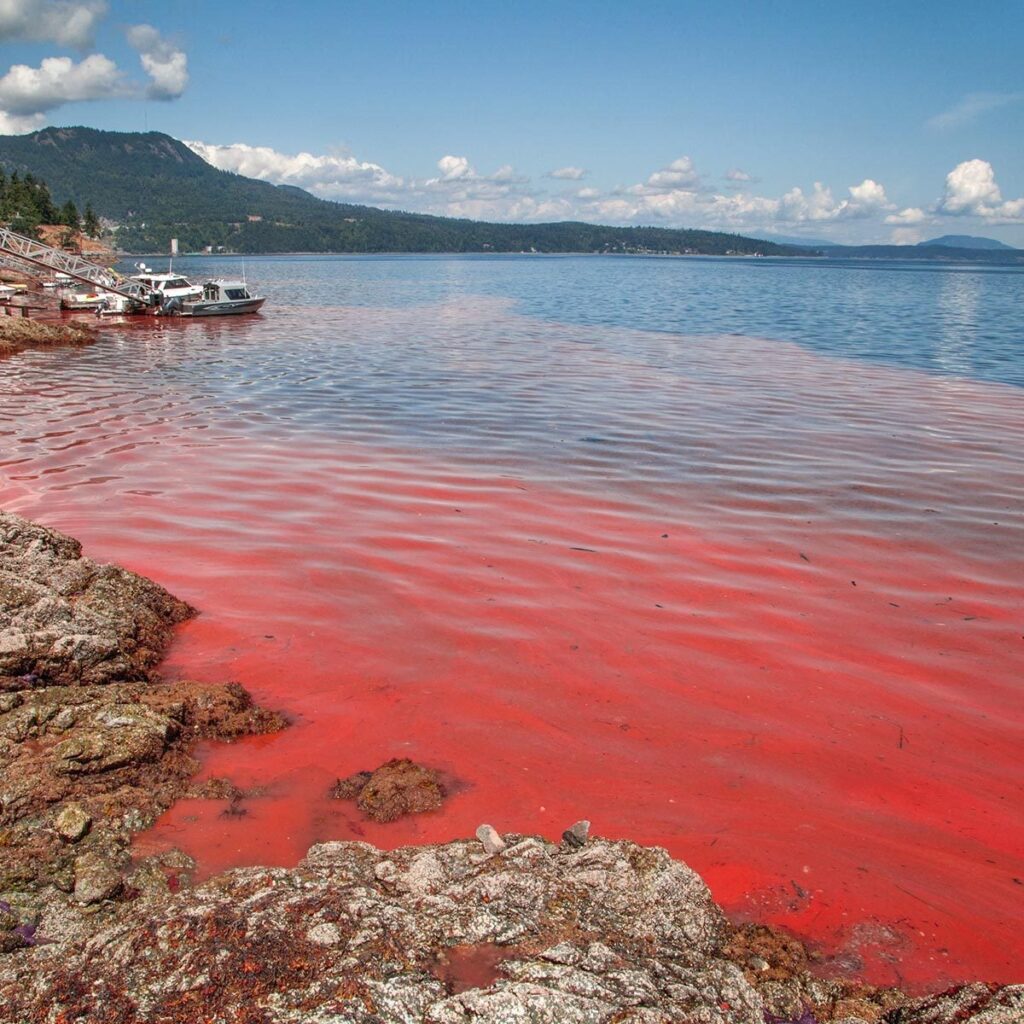
A change in the colour of the sea may look like a natural spectacle, but in some cases, it can signal a hidden food-safety risk. Algal blooms occur when algae multiply rapidly in water, sometimes turning marine waters red, brown, green or other colours. People commonly use the term “red tide” for some marine algal blooms, although not every bloom turns the water red or poses a health risk. Certain algae produce toxins that can harm marine life and contaminate seafood. When shellfish such as oysters, mussels and clams feed on toxin-producing algae, they can accumulate these toxins without showing visible signs of contamination. People who consume such seafood may then develop serious illnesses.
What are Algal Blooms?
Algae naturally occur in oceans, rivers, lakes and other aquatic environments. They form an important part of aquatic ecosystems and provide food for many marine organisms. Under favourable conditions, algae can multiply rapidly and form a dense population known as an algal bloom. Sunlight, nutrients, water temperature and water movement can influence bloom formation. Nutrient-rich runoff can also encourage excessive algal growth in some areas.
Not every algal bloom causes harm. Many algae are essential to aquatic ecosystems. The concern arises when a bloom involves species that produce toxins or when extremely dense blooms disrupt the marine environment.
Scientists use the term harmful algal bloom (HAB) when an algal bloom produces harmful effects on people, animals or aquatic ecosystems.
Why are some blooms called “red tides”?
“Red tide” is a commonly used term for certain marine algal blooms. Some blooms contain microscopic organisms that can turn seawater reddish or brownish. However, the term can be misleading. Not every algal bloom is a red tide, and not every red tide is toxic. Scientists generally prefer the term harmful algal bloom when discussing blooms that pose risks to people, animals or the environment. For food safety, the colour of the water matters less than which algae caused the bloom and whether they produce toxins.
How do harmful algal blooms affect seafood safety?
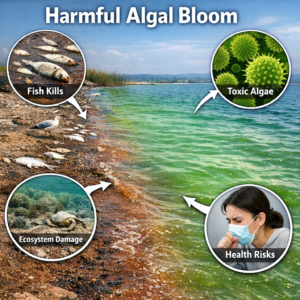
Certain algae produce marine biotoxins that can enter the aquatic food chain. Shellfish such as mussels, oysters, clams and scallops face a particular risk because they filter water to obtain food. When toxin-producing algae are present, shellfish can ingest them and accumulate the toxins in their tissues.
The shellfish may still look, smell and taste normal even when they contain harmful levels of toxins. This makes marine biotoxins particularly challenging from a food-safety perspective. Consumers cannot reliably identify contaminated shellfish by examining them at home.
What happens when people eat contaminated seafood?
Different algae produce different toxins, so the effects can vary. Some marine toxins can cause nausea, vomiting, abdominal pain and diarrhoea. Others can affect the nervous system and cause tingling, numbness, weakness, dizziness or breathing difficulties. Several recognised illnesses are associated with marine biotoxins, including:
- Paralytic shellfish poisoning (PSP)
- Diarrhetic shellfish poisoning (DSP)
- Amnesic shellfish poisoning (ASP)
- Neurotoxic shellfish poisoning (NSP)
Some harmful algal blooms can also affect fish and other marine animals, causing illness or death.
Can cooking make contaminated seafood safe?
Not necessarily. Consumers should not assume that cooking will remove marine biotoxins from contaminated seafood. Some toxins can withstand normal cooking temperatures, meaning ordinary food preparation cannot be relied upon to eliminate the hazard. That makes prevention and monitoring critical. Authorities need to identify affected areas and prevent contaminated seafood from entering the food supply.
How do authorities protect consumers?
Food-safety and environmental authorities monitor coastal waters and seafood-producing areas for harmful algal blooms and marine biotoxins. When testing detects unsafe toxin levels, authorities can:
- Close affected waters to shellfish harvesting
- Restrict the sale of seafood from affected areas
- Test seafood for specific marine toxins
- Issue public health warnings
- Reopen harvesting areas only after monitoring confirms that toxin levels have fallen to safe levels
These measures help prevent contaminated seafood from reaching consumers. Seafood-monitoring programmes play an important role in protecting public health during harmful algal bloom events.
What should consumers do?
Consumers should follow official seafood safety warnings and harvesting advisories, especially when buying or collecting shellfish from coastal areas. Never collect shellfish from waters that authorities have closed because of a harmful algal bloom. Consumers should also be cautious about seafood obtained from unregulated sources when authorities have issued a warning. Most importantly, do not rely on appearance, smell, taste or cooking to determine whether seafood contains marine toxins.
From marine health to food safety
Harmful algal blooms show how a change in the marine environment can become a food-safety concern. Toxin-producing algae can affect the marine food chain, while filter-feeding shellfish can accumulate those toxins without showing obvious signs of contamination. When people consume contaminated seafood, they can become ill.
This is why environmental monitoring, laboratory testing, harvesting controls and public warnings form the first line of defence. So, when the sea appears to “turn red,” the unusual colour is only part of the story. The more important food-safety question is: What is causing the bloom, and could it have made seafood unsafe to eat? Understanding harmful algal blooms helps us see the connection between marine ecosystem health and something much closer to home—the safety of the seafood on our plates.