Food Manifest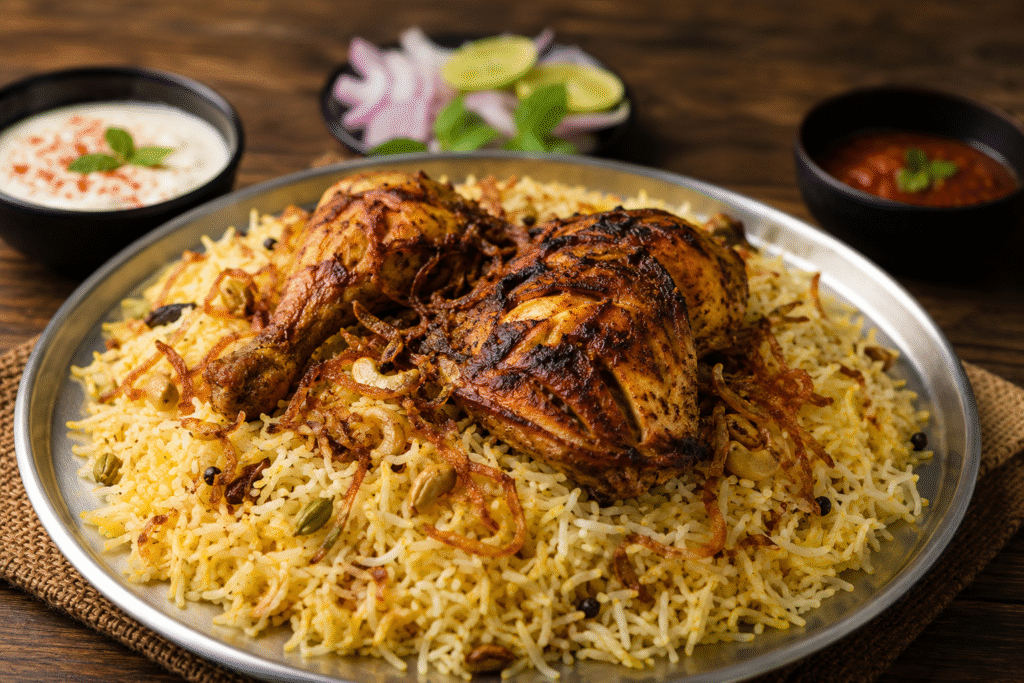
Kuzhimandi has become one of Kerala’s most popular restaurant dishes, enjoyed by families, groups of friends, and food lovers alike. Its distinctive smoky flavour, generous portions, and widespread availability have made it a favourite across the state. Yet in recent years, several food poisoning incidents involving restaurants serving mandi (locally known as kuzhimandi) have been reported in Kerala, raising consumer concerns and prompting investigations by food safety authorities. These recurring reports have led many people to question whether the dish itself is inherently unsafe. However, the evidence points in a different direction. The real issue is not the recipe but the food safety practices adopted during preparation, storage, handling, and service.
Mandi Is Not the Problem
Kuzhimandi or mandi is a traditional Middle Eastern rice and chicken dish that originated in Yemen and has become a staple in restaurants across Kerala and other parts of India. It typically consists of aromatic rice, marinated chicken, and accompaniments such as mayonnaise, salads, and pickles.
Although the dish itself is not inherently unsafe, its preparation involves several ingredients and handling steps that require strict food safety controls. Restaurants often prepare mandi in large batches, hold it for extended periods during service, and serve it with accompaniments that require careful temperature control. If food handlers do not follow good hygiene practices or maintain safe cooking and storage temperatures, the risk of foodborne illness increases.
Understanding these food safety challenges helps explain why mandi has featured in several food poisoning investigations in Kerala. The following factors are among the most common food safety risks associated with the dish.
Why Mandi Can Become a High-Risk Food
Large-Batch Preparation
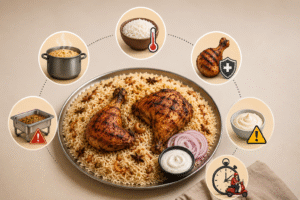
Restaurants usually prepare mandi in large quantities to meet customer demand, particularly during weekends and peak dining hours. Cooking large batches of rice and chicken requires careful temperature control. If staff fail to keep cooked food sufficiently hot or cool it rapidly before refrigeration, bacteria can multiply quickly. As batch sizes increase, maintaining safe temperatures throughout the food becomes more challenging.
Rice Requires Careful Temperature Control
Many people associate food poisoning primarily with meat, but cooked rice can also pose a significant food safety risk. Rice naturally contains spores of Bacillus cereus, a bacterium commonly found in the environment. Cooking destroys actively growing bacteria but does not eliminate the spores. If cooked rice remains at room temperature for several hours, the spores can germinate, multiply, and produce toxins that reheating cannot destroy. For this reason, restaurants should keep rice hot above 60°C or cool and refrigerate it promptly.
Chicken Must Be Thoroughly Cooked and Handled Safely
Chicken also requires strict food safety controls throughout preparation and service. Undercooked chicken may harbour pathogens such as Salmonella and Campylobacter. Even after thorough cooking, handlers can recontaminate chicken through dirty utensils, contaminated cutting boards, or poor personal hygiene. Restaurants must therefore cook chicken thoroughly, prevent cross-contamination, and maintain safe holding temperatures until service.
Mayonnaise Often Receives Attention
Many restaurants serve mandi with mayonnaise, making it another potential food safety concern. Commercially manufactured mayonnaise generally uses pasteurised ingredients and remains safe when handled correctly. However, freshly prepared mayonnaise—particularly when made with raw eggs—can pose a greater risk if contaminated or stored improperly.
Regardless of the type, restaurants should keep mayonnaise refrigerated and discard it if it remains at room temperature for extended periods.
Extended Holding Before Serving
Many restaurants prepare mandi well before customers arrive, especially during busy periods. If cooked food remains between 5°C and 60°C—the temperature danger zone—bacteria can multiply rapidly. Maintaining safe hot holding or proper refrigeration until service is therefore essential.
Delivery Can Increase the Risk
The growing popularity of online food delivery has increased the time between preparation and consumption. Although most deliveries reach customers quickly, traffic delays, long delivery distances, or improper packaging can allow food to remain within unsafe temperature ranges. Consumers should therefore eat delivered food promptly and refrigerate leftovers without delay.
What Recent Incidents Tell Us
Recent food poisoning incidents linked to mandi restaurants in Kerala have prompted inspections, temporary closures, and laboratory testing of food samples. Although investigators work to identify the exact source of contamination in each case, these incidents consistently reinforce one message: food safety depends on maintaining good hygiene, preventing cross-contamination, controlling temperatures, and handling food safely at every stage.
Rather than blaming a single dish, these incidents remind us that any cooked food can become unsafe when food safety practices break down.
Tips for Consumers
Consumers can reduce their risk of foodborne illness by following a few simple precautions:
- Choose restaurants that maintain good hygiene standards.
- Prefer freshly prepared food, particularly during busy service periods.
- Eat the meal as soon as possible after it is served or delivered.
- Refrigerate leftovers within two hours.
- Reheat leftovers thoroughly until piping hot before consumption.
- Avoid mayonnaise or other accompaniments that appear to have been left unrefrigerated for prolonged periods.
A Shared Responsibility
Safe food does not depend on a single ingredient or recipe—it depends on the people who prepare, handle, transport, and serve it.
Restaurants must implement Good Hygienic Practices (GHP), maintain safe cooking and storage temperatures, prevent cross-contamination, and train food handlers in proper food safety procedures. Regulators must continue to monitor compliance, while consumers should remain aware of safe food handling practices and report suspected food safety violations when necessary.
Mandi remains one of Kerala’s favourite dishes, and there is no reason consumers should avoid it simply because it has featured in recent food poisoning reports. Instead, these incidents should encourage restaurants to strengthen food safety practices and remind consumers of the importance of choosing establishments that prioritise hygiene.
Ultimately, food poisoning is not caused by mandi—failures in food safety cause it. When everyone in the food chain fulfils their responsibility, mandi can be enjoyed safely, just like any other freshly prepared meal.