Food Manifest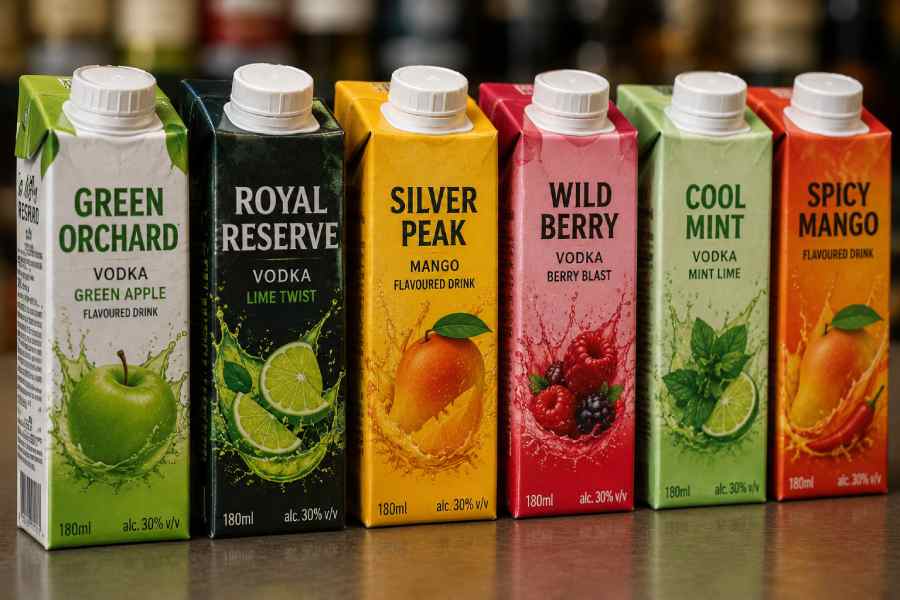
Key Update
The Supreme Court has sought responses from the Centre, states, and Union Territories on a petition seeking a ban on the sale of alcohol in tetra packs and sachets. A bench comprising Surya Kant, Joymalya Bagchi, and Vipul M Pancholi issued notices to the authorities and directed them to file their responses within four weeks. The petition, filed by Campaign Against Drunken Driving, alleged that liquor manufacturers use packaging that closely resembles fruit juice cartons and pouches, making it difficult for consumers to distinguish alcohol products from non-alcoholic beverages.
Court Flags Concerns Over Packaging Design
Appearing for the petitioner, advocate Vipin Nair argued that the current definition of “bottle” under excise laws remains vague and allows companies to market alcohol in misleading forms. He pointed out that several liquor products use fruit images, colourful designs, and flavour labels such as green apple, mango, and chilli, despite containing vodka or other alcoholic beverages. During the hearing, the bench observed that such packaging appeared deceptive and raised concerns over the similarity between alcohol packs and fruit-based drinks.
Plea Seeks Uniform Excise Policy
The petition urged the Centre to introduce a uniform policy for all states and Union Territories and immediately prohibit the sale of liquor in tetra packs and sachets. It also sought amendments to state excise laws to standardise the definition of “bottling” by restricting alcohol packaging to glass bottles or other clearly distinguishable containers. According to the plea, varying excise laws across states currently give authorities broad discretion to approve multiple forms of liquor packaging without clear standardisation.
NGO Warns of Risks to Children and Public Safety
The petitioner argued that inconspicuous liquor packaging could encourage underage consumption and make it easier to conceal and consume alcohol in public places such as parks and playgrounds. The NGO also raised concerns over the absence of prominent health warnings on such products, noting that warning labels, if present, often appear in very small print and remain difficult for consumers to notice. The petition further linked the packaging trend to increased risks of drunk driving, illegal public consumption, smuggling across state borders, and environmental damage.
Source: Deccan Herald