Food Manifest
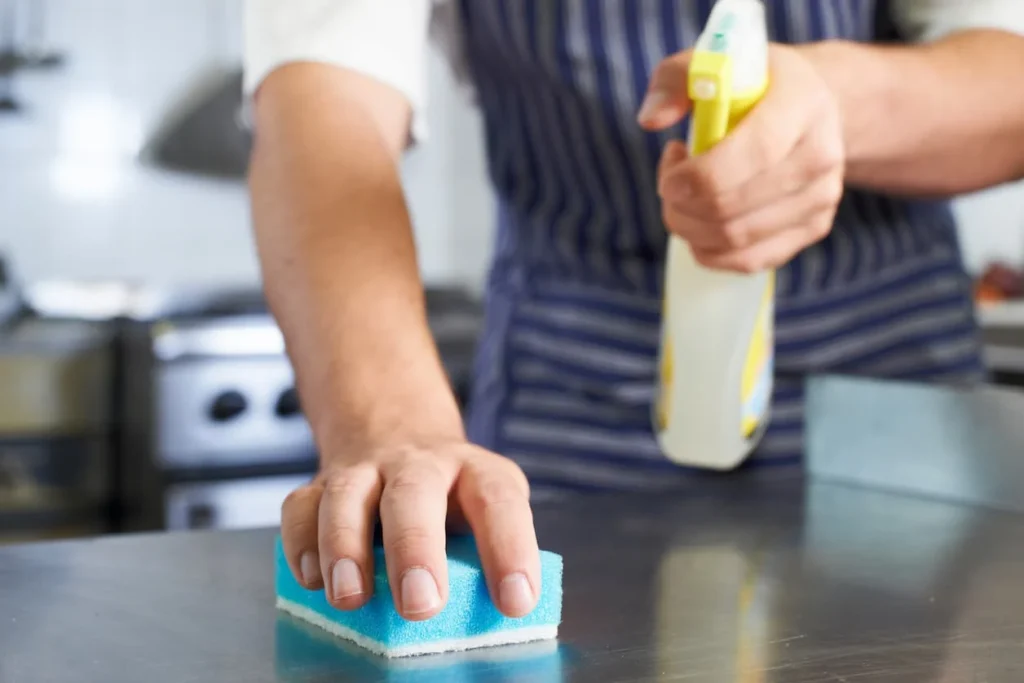
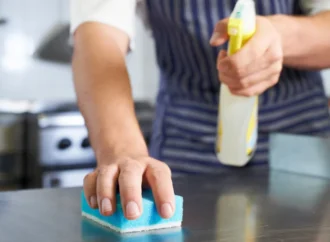
A kitchen countertop may look spotless, utensils may appear clean, and food preparation areas may seem hygienic. However, appearances can be misleading. Harmful microorganisms, including bacteria and viruses, can survive on surfaces even when no visible dirt or food residue remains. Therefore, cleaning alone cannot guarantee food safety. Proper sanitisation also helps control contamination and reduce the risk of foodborne illnesses.
Cleaning and Sanitisation: Understanding the Difference
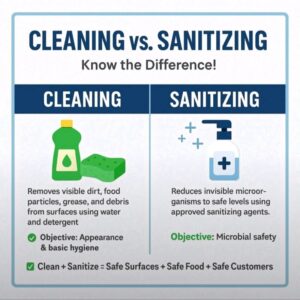
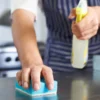
Cleaning and sanitisation serve two distinct but complementary purposes. Cleaning removes visible dirt, grease, food particles and other impurities from surfaces using water, detergents or cleaning agents. Although cleaning reduces the number of microorganisms, it does not necessarily eliminate them.
Sanitisation takes the process further by reducing microorganisms on cleaned surfaces to levels considered safe under applicable food safety standards. Food handlers should pay particular attention to surfaces and equipment that come into direct contact with food.
Disinfection provides another level of microbial control by destroying or inactivating many disease-causing microorganisms on surfaces. However, food handlers should not use every disinfectant on food-contact surfaces. They must choose products approved for the intended application and follow the manufacturer’s instructions.
Why Is Sanitisation Important in Food Safety?
Food preparation areas can become sources of contamination when proper hygiene practices are not followed. Raw meat, poultry, seafood and unwashed vegetables may carry harmful microorganisms. If cutting boards, knives, countertops or other utensils are not properly cleaned and sanitised between uses, these microorganisms can transfer to ready-to-eat foods. This process, known as cross-contamination, can introduce harmful pathogens into food that may not undergo further cooking.
Effective sanitisation helps reduce this risk by lowering microbial contamination on food-contact surfaces. It is particularly important in commercial kitchens, restaurants, food processing facilities, catering establishments and other food-handling environments where large quantities of food are prepared.
Which Surfaces Need Sanitisation?
Sanitisation should focus on surfaces and equipment that come into contact with food, directly or indirectly. These include:
- Cutting boards, knives and food preparation utensils.
- Kitchen countertops and food preparation tables.
- Food processing equipment and machinery.
- Storage containers and food-contact equipment.
- Slicers, mixers and other frequently used appliances.
Frequently touched areas such as refrigerator handles, taps and door handles also require regular cleaning and appropriate disinfection as part of an overall hygiene programme.
Common Sanitisation Mistakes to Avoid
Even when sanitising products are available, incorrect practices can reduce their effectiveness.
1. Sanitising without cleaning: Applying a sanitiser over grease, food residue or dirt can reduce its effectiveness. Clean surfaces thoroughly before sanitising.
2. Incorrect chemical concentration: Using too little sanitising agent may not achieve the required microbial reduction, while excessive concentrations may leave harmful chemical residues or damage equipment. Always follow the manufacturer’s instructions.
3. Insufficient contact time: Sanitising agents need adequate contact time to work effectively. Wiping them off immediately may prevent the desired result.
4. Using the same cleaning cloth everywhere: Reusing contaminated cloths across different surfaces can spread microorganisms rather than remove them. Clean and sanitise materials properly, and replace cloths regularly.
5. Assuming stronger chemicals mean better sanitisation: Higher concentrations do not necessarily improve effectiveness. They may create chemical hazards, particularly on food-contact surfaces.
Best Practices for Effective Sanitisation
A systematic approach is necessary for maintaining hygienic food preparation environments. Food handlers and food businesses should follow these basic practices:
- Remove food debris and visible dirt before cleaning surfaces with an appropriate detergent.
- Rinse surfaces as required to remove detergent residues.
- Apply a suitable food-contact surface sanitiser according to the manufacturer’s instructions.
- Maintain the recommended concentration and contact time.
- Follow product-specific instructions on whether rinsing with potable water is required.
- Allow surfaces to air-dry where recommended.
- Maintain a regular cleaning and sanitisation schedule.
- Train food handlers in proper chemical handling, dilution and hygiene procedures.
Food businesses should also maintain documented cleaning and sanitisation procedures to ensure consistency and accountability.
Sanitisation Is a Shared Responsibility
Maintaining food safety requires more than keeping kitchens visually clean. It involves understanding how microorganisms spread and adopting practices that minimise contamination risks. For food businesses, effective sanitisation should be an integral part of their food safety management system. For households, regularly cleaning and sanitising appropriate food-contact surfaces can help create a safer cooking environment.
Ultimately, a clean-looking surface is not necessarily a safe surface. Proper cleaning followed by effective sanitisation helps bridge that gap, protecting food, preventing contamination and safeguarding public health.