Food Manifest
We often use the term “food poisoning” to describe any illness caused by contaminated food. But foodborne illness does not always happen in the same way. Two important mechanisms are food infection and food intoxication. Both can cause symptoms such as diarrhoea, vomiting, abdominal pain and nausea, but they differ in what causes the illness after we consume the food. Understanding this difference also helps explain why proper cooking, storage and food handling play such an important role in food safety.
What Is a Food Infection?
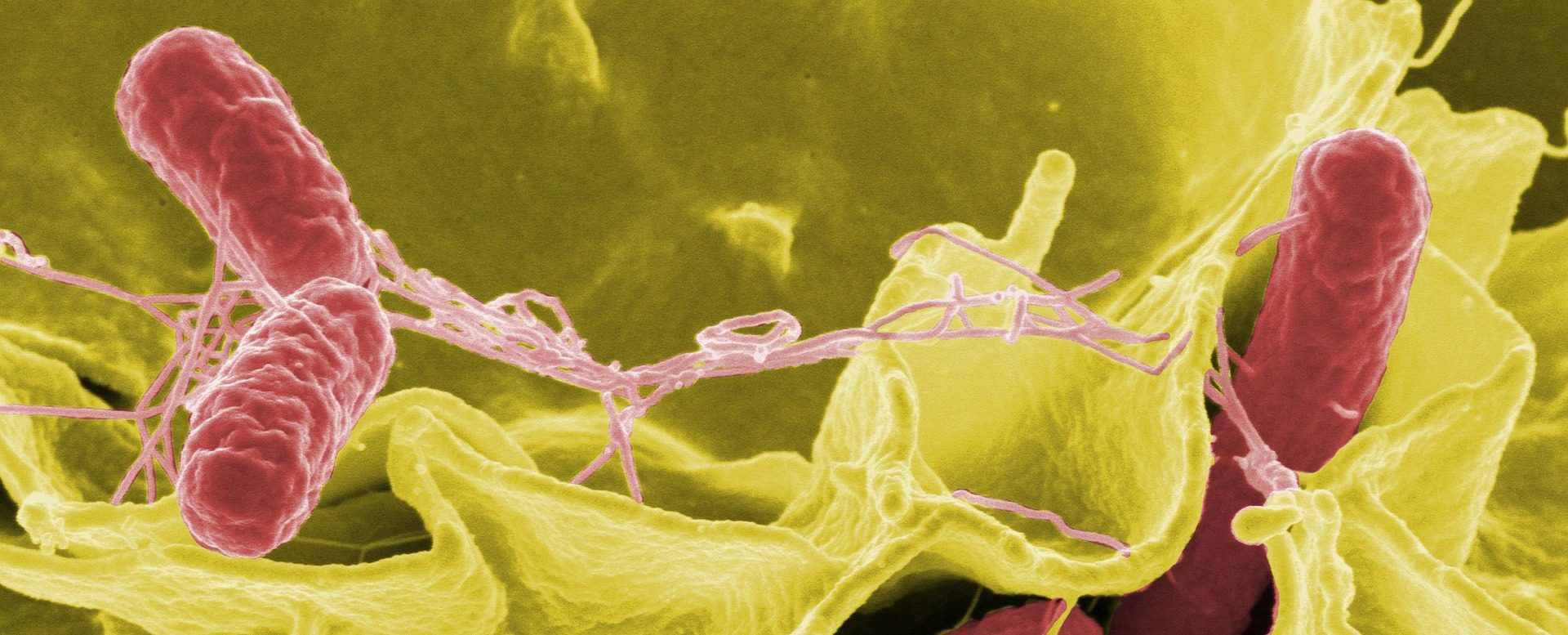
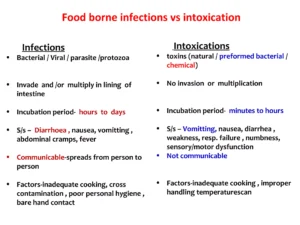
A food infection occurs when we consume food or water containing harmful microorganisms, such as bacteria, viruses or parasites. After entering the body, these microorganisms can survive and, depending on the organism, multiply or invade tissues. The body’s response to the infection then causes illness. For example, Salmonella, Campylobacter and certain strains of Escherichia coli can cause foodborne infections. Symptoms can include:
- Diarrhoea
- Abdominal cramps
- Nausea
- Vomiting
- Fever
- Weakness
The time it takes for symptoms to appear varies from one microorganism to another. Some infections can cause illness within hours, while others may take several days or longer.
What Is Food Intoxication?
Food intoxication occurs when we consume food that already contains toxins. In this case, the toxin causes the illness rather than the need for the microorganism to grow inside the person. Some bacteria can produce toxins when they grow in food under suitable conditions. For example, Staphylococcus aureus can produce toxins in food, while Clostridium botulinum can produce botulinum neurotoxin. Depending on the toxin involved, symptoms may appear relatively quickly after eating the contaminated food. Common symptoms can include:
- Nausea
- Vomiting
- Abdominal cramps
- Diarrhoea
- Other symptoms specific to the toxin
So, What’s the Key Difference?
A simple way to remember it is:
Food infection: We consume the harmful microorganism, which then causes illness.
Food intoxication: We consume a toxin that the microorganism has already produced.
However, foodborne illness does not always fit neatly into one category. Some microorganisms can cause illness through more than one mechanism, so scientists classify specific illnesses based on how the particular organism or toxin causes disease.
Why Does This Difference Matter?
The distinction helps us understand why cooking alone cannot always make improperly handled food safe. Proper cooking can destroy many harmful microorganisms. However, some toxins can withstand heat. If bacteria have already produced a heat-resistant toxin in food, reheating the food may not remove the risk. That is why food safety does not begin and end with cooking. We also need to prevent contamination and control the conditions that allow microorganisms to grow and produce toxins.
How Can You Reduce the Risk?
You can reduce the risk of both food infections and food intoxications by following basic food-safety practices.
Keep food at safe temperatures
Microorganisms can multiply rapidly when food stays in temperatures that favour their growth. Refrigerate perishable foods promptly and avoid leaving them at room temperature for extended periods.
Cook food thoroughly
Cook foods thoroughly, particularly foods that pose a higher risk of contamination, such as meat, poultry and eggs. Follow appropriate cooking temperatures and methods.
Prevent cross-contamination
Keep raw meat, poultry and seafood away from ready-to-eat foods. Clean and sanitise food-contact surfaces and use appropriate utensils for food preparation.
Wash your hands
Wash your hands thoroughly before preparing or eating food and after handling raw foods, using the toilet or performing other activities that can transfer microorganisms to your hands.
Store food properly
Follow storage instructions and use food within the recommended time. Remember that refrigeration slows the growth of many microorganisms but does not keep food safe indefinitely.
Food Can Look Safe and Still Make You Sick
One of the biggest challenges with foodborne illness is that contamination is not always visible. Food may look, smell and taste normal while harmful microorganisms or toxins are present. That is why we should not rely on our senses alone to decide whether food is safe to eat. Instead, we need to focus on safe sourcing, proper cooking, hygienic handling, appropriate storage and temperature control.
The Bottom Line
Food infection and food intoxication describe two different ways contaminated food can cause illness. With a food infection, the harmful microorganism enters the body and causes the illness. With food intoxication, we consume a toxin that the microorganism has already produced. Knowing the difference may seem like a technical detail, but it reinforces an important food-safety message:
Prevent contamination. Control microbial growth. Handle and store food safely.
Because when it comes to food safety, what we cannot see can sometimes be what matters most.